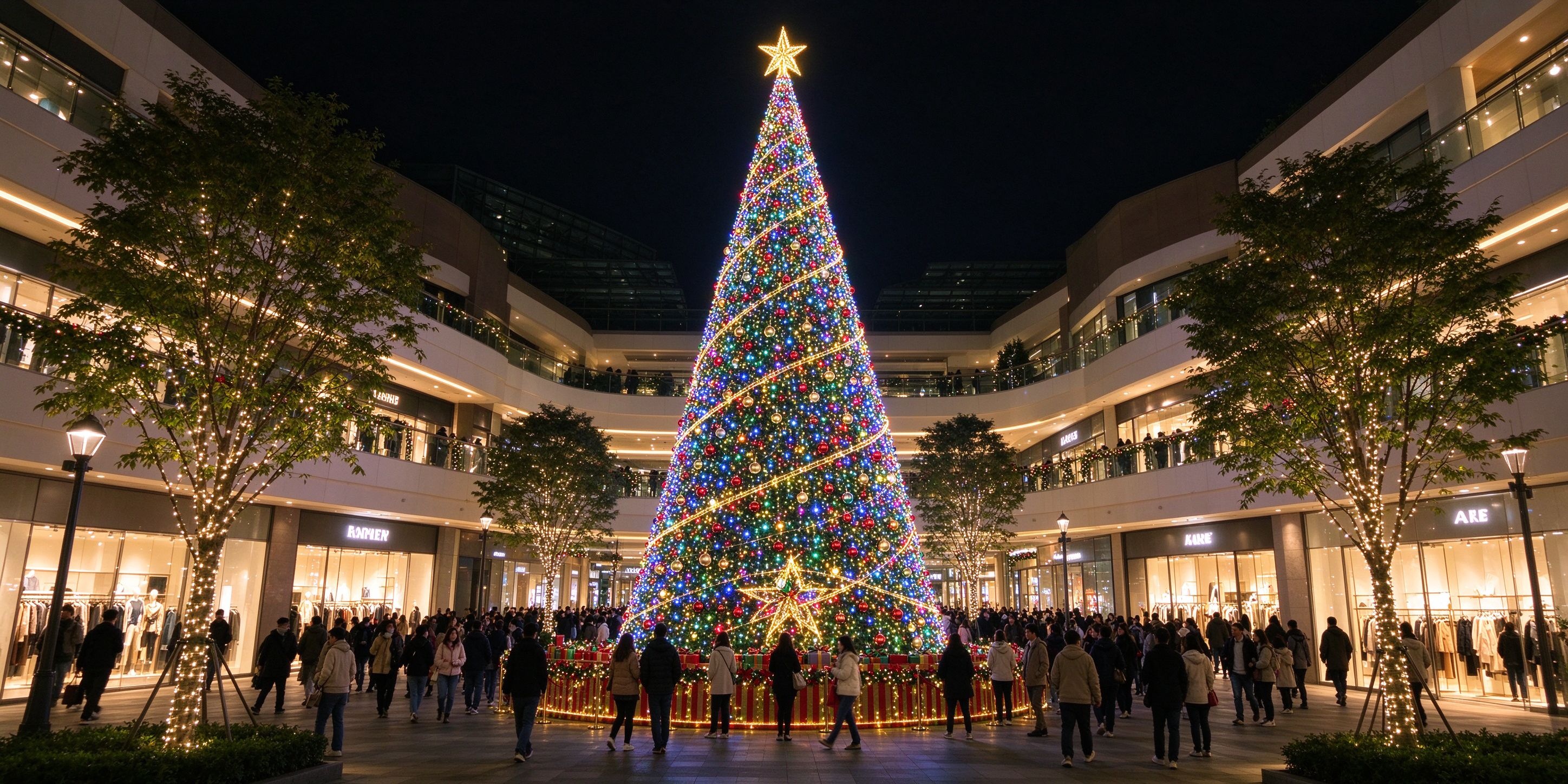
The commercial Christmas light display market is in the middle of its biggest transformation since LED replaced incandescent. Buyers in 2026 are no longer purchasing strings of bulbs; they are commissioning complete light experiences — animated motifs, immersive tunnels, drive-through trails and interactive zones — and they are measuring every dollar against foot traffic, dwell time and social reach. If you are a mall operator, a municipality, a theme park or an events company planning your next commercial Christmas lights investment, here is what the data and our order books say about the year ahead.
Trend 1: From Display to Destination
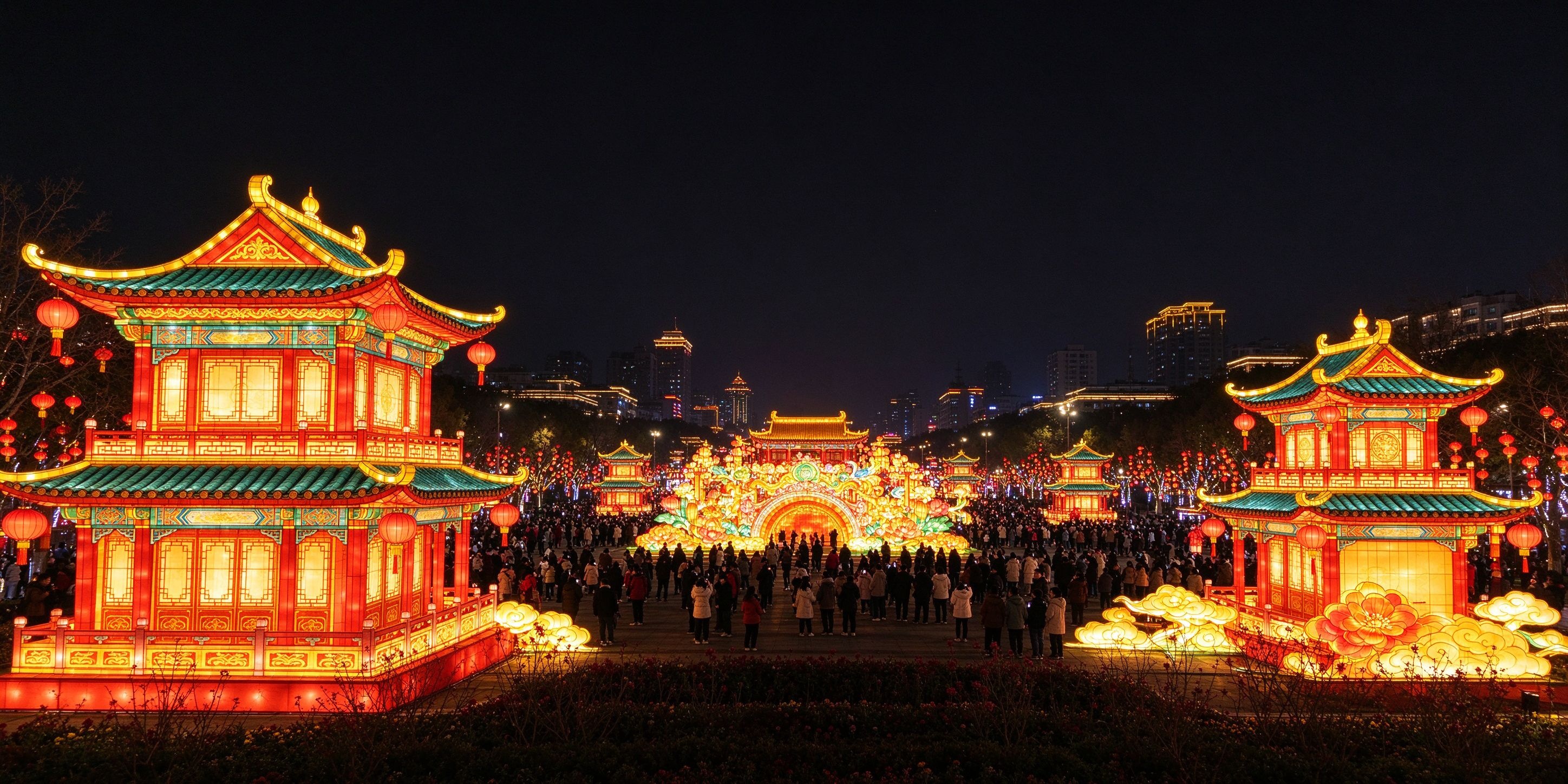
The most striking shift is scope. A "display" used to mean a decorated plaza; now the winning format is a ticketed, walk-through light show that behaves like a seasonal attraction. Malls that once spent on static decorations are installing complete commercial light displays with entry arches, hero sculptures and photo moments, because those displays keep families on site for 60 to 90 minutes instead of 10. That dwell time converts directly into food-court and retail spend, which is why property owners are increasingly funding Christmas light displays from marketing budgets rather than maintenance budgets.
Trend 2: Immersive Formats Dominate
Light tunnels and walk-through experiences
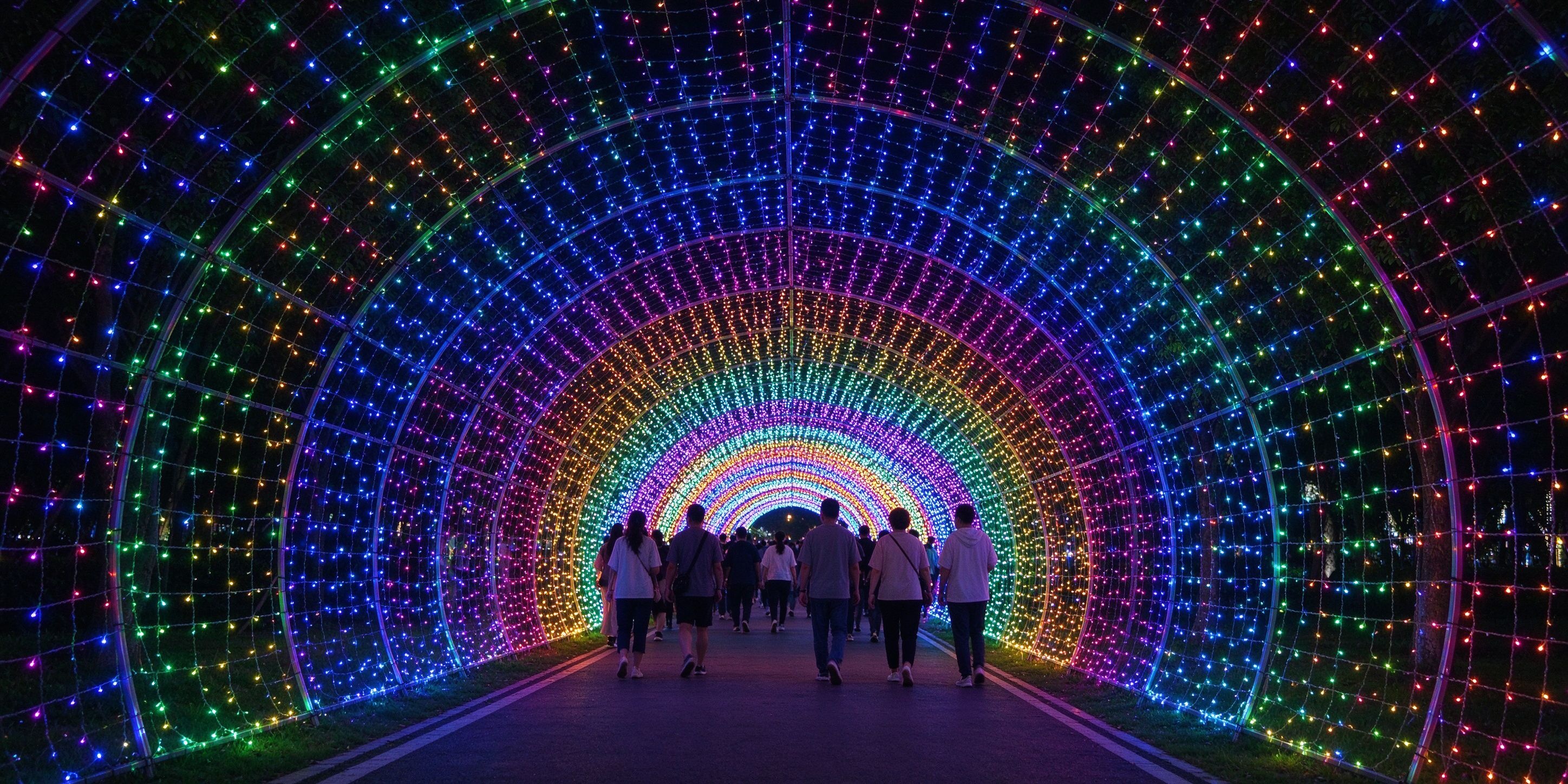
Immersive elements — tunnels, canopies, arches and mazes — are the single most requested category in our commercial Christmas light enquiries. A 30-metre LED light tunnel is the most photographed structure in almost any display, and it drives repeat visits because the experience changes as you walk through it. Our LED light tunnel and light archway installations are now standard components in shopping-centre and theme-park Christmas shows across Europe, North America and the Middle East.
Drive-through formats keep growing
Drive-through Christmas light trails exploded during the pandemic and have stayed, because they monetise capacity that walk-through events cannot reach: cars. Operators run drive-through routes at 20 to 40 vehicles per hour per lane, selling premium time slots and audio-synced shows. The equipment is the same modular family — giant Christmas trees, tunnels, arches, animated scenes — which means a venue can switch between walk-through and drive-through layouts across the season.
Trend 3: Animation and Programmability Are Expected
Static illumination no longer impresses. Buyers expect every motif to animate — a reindeer team lantern whose heads nod in sequence, a Santa sleigh lantern that appears to fly with a chase-light trail, a giant tree that cycles through colour palettes. Modern LED control systems make this affordable: addressable LED modules and DMX controllers let one operator reprogram the entire display from a laptop, running different sequences for weekdays, weekends and specific holidays. When the season extends into the new year light display window — and then on to chinese new year lights in late January — reprogrammability is what turns a one-month asset into a three-month one.
Trend 4: Energy and Sustainability Are Buying Criteria
Energy cost is now a first-order decision factor, and for good reason. A large commercial display that once consumed 300 kW of incandescent power can run on roughly 60 to 80 kW with modern LEDs — a saving of 70 to 80 percent across a twelve-week season. At commercial electricity rates, that difference can reach five figures for a big installation. Add the longer LED lifespan (50,000+ hours means many seasons without replacement) and the sustainability argument becomes a financial one. Several municipal clients now publish their LED energy savings in their holiday PR, which earns goodwill and press coverage at the same time.
Trend 5: Hybrid Seasonal Programming
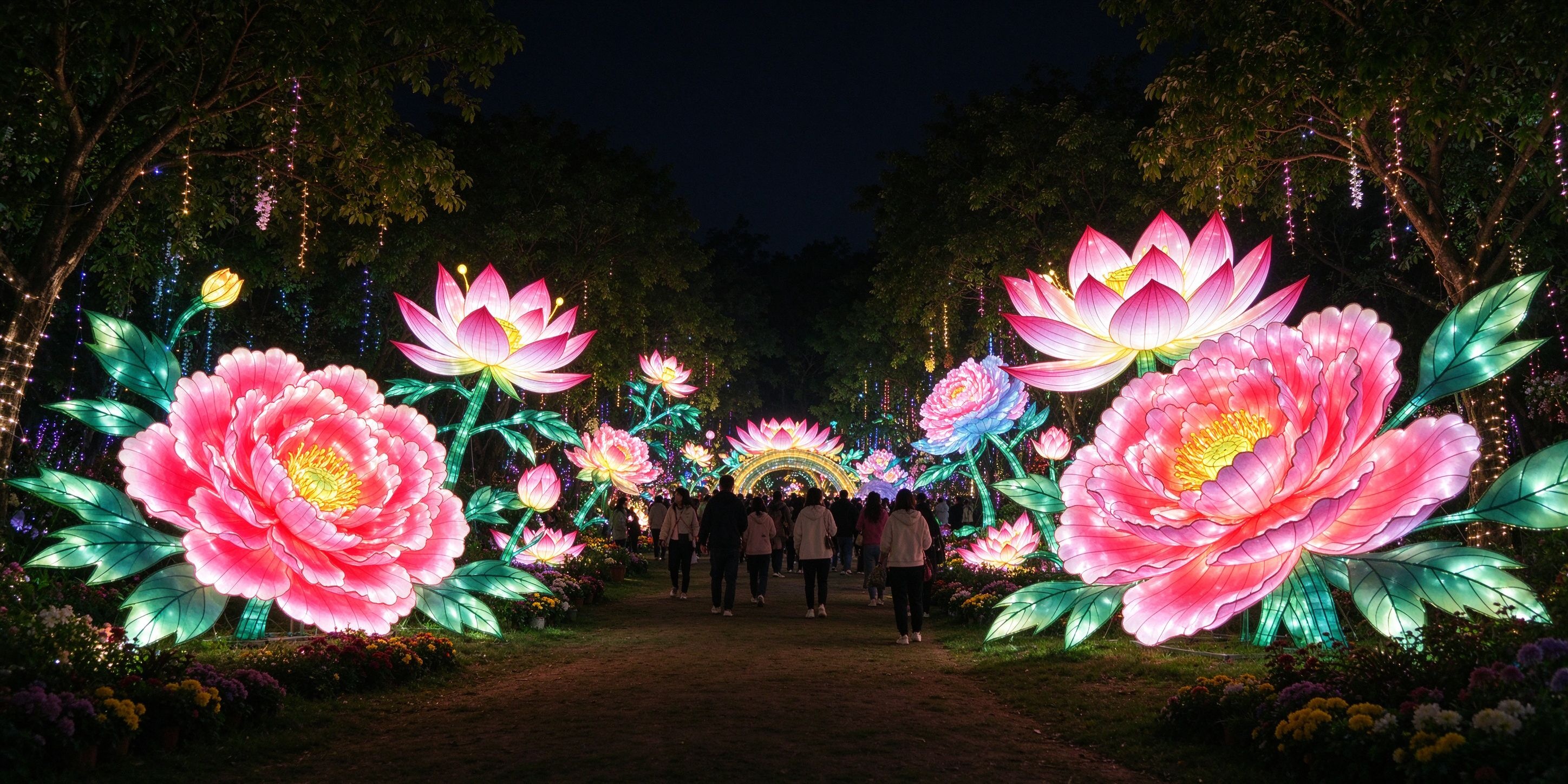
The most sophisticated buyers no longer think of Christmas as the season's only event. They purchase modular displays and reprogram them across the year: a halloween light show in October, the Christmas run in November and December, and a new year light display plus Chinese New Year programming in January and February. Because our Christmas-themed lanterns — from the giant Christmas tree lantern to candy-cane paths and snowflake clusters — are engineered for outdoor reuse, one capital investment supports several ticketed events. Buyers who plan this way report second-year ROI far above those who treat decorations as a single-season consumable.
What Buyers Should Verify Before Ordering
- Weather rating: insist on IP65 or better for outdoor commercial use.
- Voltage flexibility: confirm the display can be wired for your market's 110V, 220V or 240V supply.
- Structural certification: large trees and sculptures need wind-load and anchoring documentation for insurance and permits.
- Control compatibility: check that lighting sequences can be reprogrammed on site without factory support.
- Lead time: a strong commercial Christmas lights programme is planned in summer — August and September orders protect December openings.
- Warranty and spares: 12-month structural and 24-month LED warranties are industry norms; confirm spare modules are stocked.
Budget Realities for 2026
Pricing for commercial Christmas light displays varies with size and animation, but useful planning ranges from our order data: a mall atrium package with a 10-metre tree, arches and animated motifs typically runs in the tens of thousands of dollars; a destination-scale park display with tunnels, drive-through sections and 30-plus hero pieces runs into the hundreds of thousands. What has changed is the business case: venues now underwrite these investments with ticket revenue, sponsorship and measurable dwell-time gains, so the question buyers ask is no longer "how much does it cost?" but "what is the return per square metre of illuminated experience?"
Conclusion
2026 is the year to buy a commercial Christmas light display as a programmable asset rather than a decoration. Invest in immersive formats, demand animation and energy efficiency, plan a hybrid season that carries the asset from a halloween light show through to chinese new year lights, and choose a manufacturer who can document weather, structural and electrical compliance. Our team at the Zigong factory designs, builds and ships commercial Christmas displays worldwide, with a free quotation and 3D preview within 48 hours of your enquiry.
Ready to start your project? Contact the Lantern Festival team at our contact page or call +86 13990006666 for a free consultation and quotation within 48 hours.