Halloween Light Show Ideas: Spooky, Safe, and Socially Shareable
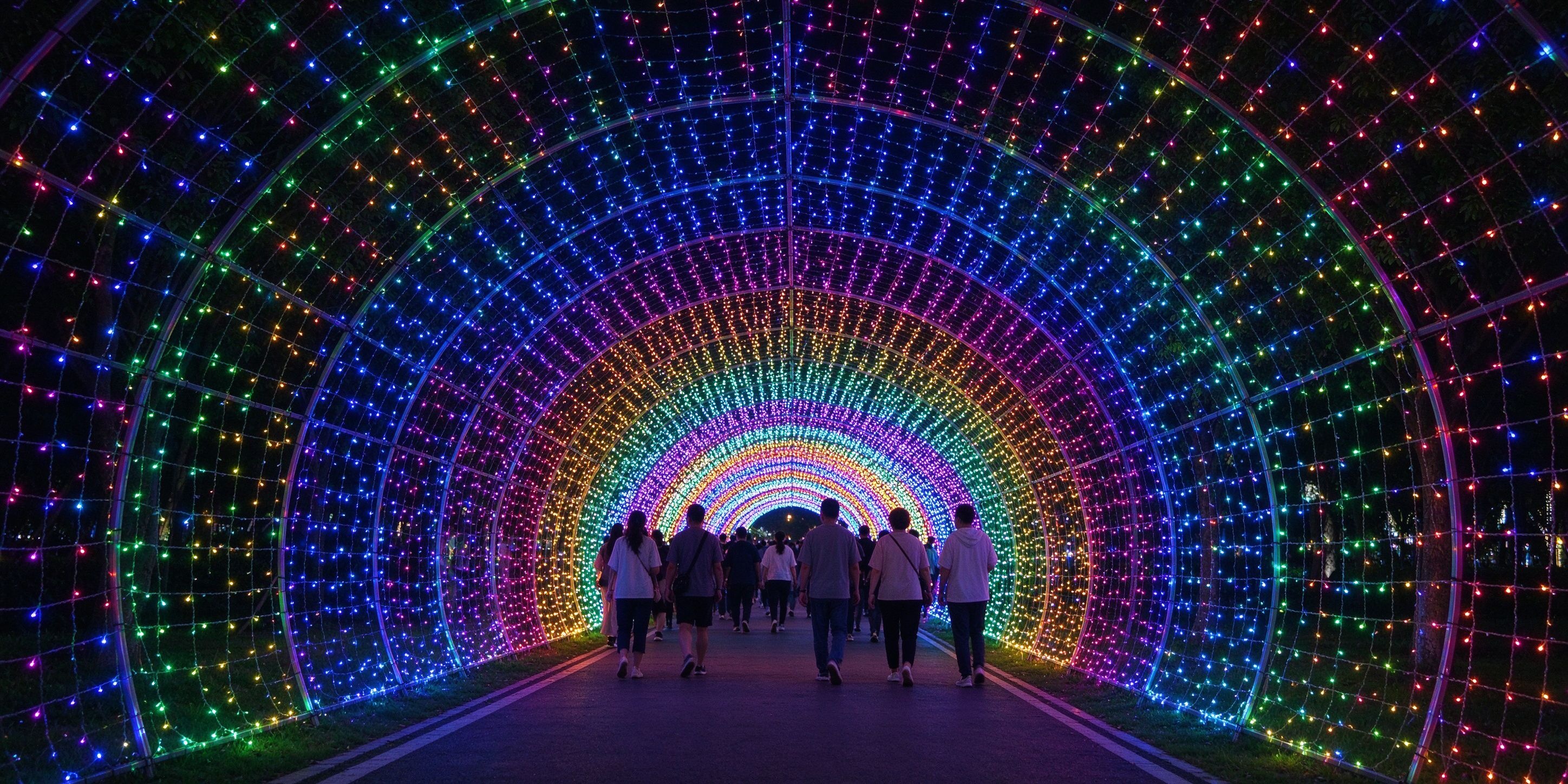
Halloween is the fastest-growing light event season in North America, and for good reason: it opens the fall entertainment window, it runs for four to six weeks (longer than any other seasonal holiday), and it attracts an audience that is young, social and eager for shareable experiences. But Halloween presents a design challenge no other festival faces: the event must be spooky enough to feel authentically Halloween, yet safe and welcoming enough for the families who buy most of the tickets. The venues that master this balance — a halloween light show that is atmospheric rather than terrifying, photogenic rather than gory — sell out season after season. This guide collects the design ideas and best practices that make it work.
The Design Principle: Atmosphere Over Terror
The most successful halloween light shows understand that the audience's sweet spot is "deliciously spooky, never frightening." A sudden scare that makes a child cry empties a venue of its core demographic; an atmosphere that makes visitors feel brave and delighted fills it. The light show medium is naturally suited to atmosphere — it is luminous, colorful and safe, and it can evoke Halloween's mood without any of its violence. The design rule is to create tension without threat: silhouettes, fog, flickering light and mysterious shapes build the Halloween feeling, while the lighting itself remains bright enough that every path, face and exit is clearly visible.
Hero Ideas: The Pieces That Anchor the Show
The Pumpkin Patch That Glows
The pumpkin is Halloween's universal symbol, and an illuminated pumpkin patch is the safest and most shareable hero zone in any halloween light show. Cluster hundreds of glowing jack-o'-lantern lanterns in a field or courtyard — varied sizes, warm orange tones, some with carved-style grins — and watch the photo traffic. A halloween pumpkin lantern field works for every audience: toddlers pose in front of it, teenagers photograph it, and sponsors love its clean, family-friendly branding surface.
The Haunted Tunnel
For the "spooky" side of the balance, a haunted tunnel delivers atmosphere without gore. A walk-through with fog, animated bats overhead, shifting colors and sudden silhouettes gives visitors the thrill of a scare zone with none of the contact scares. The interactive light maze is a proven variant: the maze's walls change color as guests navigate, so the experience is playful, disorienting and endlessly re-photographable — and parents can always see their children through the translucent walls.
The Castle of Shadows
An illuminated castle facade reads instantly as "haunted mansion" and gives the show a skyline. Our European castle lantern, lit in deep violet and emerald with animated window lights and fog at the base, becomes the event's postcard image — the piece that appears in every drone shot and every article about the festival.
Floating Spirits and Glowing Orbs
The most atmospheric and cheapest-to-operate zone is a "spirit field": a lawn of softly pulsing floating orbs light sculptures in cool white and ghostly blue, drifting in an artificial fog layer. It reads as ghosts without looking like anything scary, and it photographs beautifully — long-exposure shots of the orb field are the kind of content that earns the event press coverage.
Scare Levels: Zoning the Fear
The professional solution to the family-versus-thrill-seeker problem is zoning by scare level. Divide the event into clearly marked zones — a "Little Goblins" family area with pumpkins, friendly characters and no scares; a "Spooky Woods" mid-level zone with fog and atmosphere; and an "After Dark" premium zone for older visitors with the full theatrical experience, ticketed separately and clearly advertised as intense. Zoning lets families choose their level, protects the family audience, and creates a second revenue line with the premium ticket. It also simplifies marketing: the event can be promoted as "scare-free before 7 pm" and intensify after dark, which removes the biggest objection parents have.
Safety: The Non-Negotiable for a Night Event
Halloween events run at night, in the dark, with crowds that include young children, and safety design cannot be optional. The fundamentals: path lighting that keeps every walkway clearly navigable while the set pieces stay mysterious; flame-retardant fabrics and certified low-voltage LED systems everywhere (real flames are banned in most venue contexts for a reason); fog machines positioned and ventilated so they never obscure the path or exit; and electrical distribution planned so no cable crosses a walkway unprotected. Crowd flow deserves special care — scare zones concentrate people, so every attraction needs a defined queue area that cannot block the main path, and exit routes must be obvious and never gated behind an attraction. A well-designed halloween light show is spooky in its content and utterly boring in its safety — that is the goal.
Social Shareability: Engineering the Screenshot
Halloween light shows live or die by social media, and shareability should be designed in from the first sketch. Every zone needs a designated "photo moment" — a composition that works at phone level, with good framing and a clean background. Build photo frames and selfie stations that are themselves illuminated, and place the branded hashtag at eye level where it appears naturally in the frame. The most effective idea we see in successful events is the "costume moment": since Halloween visitors arrive in costume, a dedicated stage or pedestal in the brightest zone where families can photograph their costumes against the glowing display — this single element generates an extraordinary volume of user-generated content, and every post is free advertising with a timestamp.
Programming drives the sharing loop. Announce a weekly "best costume" competition with the prize being a sponsored family package; post the winners from the event's official account and tag them; and run a "spooky selfie" contest where the entry is a photo at the event's photo moments. Each contest re-posts the venue's content across the winners' networks, which is how a regional event becomes a regional phenomenon.
Extending the Season and the Value
Halloween's four-to-six-week window is the longest seasonal run in the industry, and it is the ideal testing ground for a venue's permanent light-event infrastructure. The power distribution, anchors, paths and control systems installed for Halloween are reusable for a Christmas holiday lights display that follows immediately after, then for a spring lantern festival — so the first Halloween show effectively pays for infrastructure that serves three seasons. Buyers should therefore specify the display as a seasonal system: re-usable infrastructure, re-themable skins and modular hero pieces, and a control system that can host multiple show files. Halloween is not a one-off; it is the opening act of a year-round light program.
Conclusion
Halloween light shows are the fastest-growing seasonal format in the industry because they combine the longest season, the youngest audience and the most shareable aesthetic. The winning formula is consistent: atmosphere over terror, scare levels zoned for families and thrill-seekers, safety engineered invisibly, and every zone designed to be photographed. Build the show that way — with glowing pumpkin fields, haunted tunnels, castle silhouettes and orb fields — and the social sharing does the marketing while the tickets do the math. Halloween is the season where light events prove they can be spooky, safe and spectacular all at once.
Build Your Halloween Light Show
Tell us your venue, scare-level strategy and dates. Our designers will propose a spooky-yet-family-safe concept with a free quotation within 48 hours.
Get a Free Quote☎ +86 13990006666 | ✉ 1712646264@qq.com