Animal Lanterns Educational Value: Combining Entertainment with Wildlife Conservation
Zoo lights events have transformed the economics of zoological institutions, turning the quietest season of the year into the most profitable one. But the institutions that run the most successful events have discovered something beyond revenue: a giant illuminated panda lantern is not just a crowd-pleaser — it is a conservation classroom. Animal lanterns give zoos a unique platform to educate visitors about wildlife at a moment when those visitors are relaxed, delighted and receptive, and the institutions that design their light displays with an educational spine report measurably deeper visitor engagement, stronger donor conversations and a sharper conservation brand. This guide explains how to unlock that value.
The Educational Opportunity Hidden in the Night
Daytime zoo visits are busy, noisy and information-saturated; children are tired and parents are managing logistics. The evening zoo lights event is different: families move at leisure, dwell in front of exhibits, and share the experience together — precisely the conditions under which learning sticks. Research on informal science education consistently finds that emotionally positive experiences create the strongest memory retention, and a glowing, life-size animal lantern is the definition of an emotionally positive encounter. A visitor who photographs their child beside a giant panda lantern has already begun a conservation story — the institution's job is to finish it with information.
The display itself is the hook; the message is the payload. The most effective zoo light shows pair every hero animal with a conservation narrative: what the animal is, where it lives, why it is threatened, and what the zoo is doing about it. The lantern becomes the visual anchor for a story that the daytime visit may never tell.
Designing Lanterns That Teach
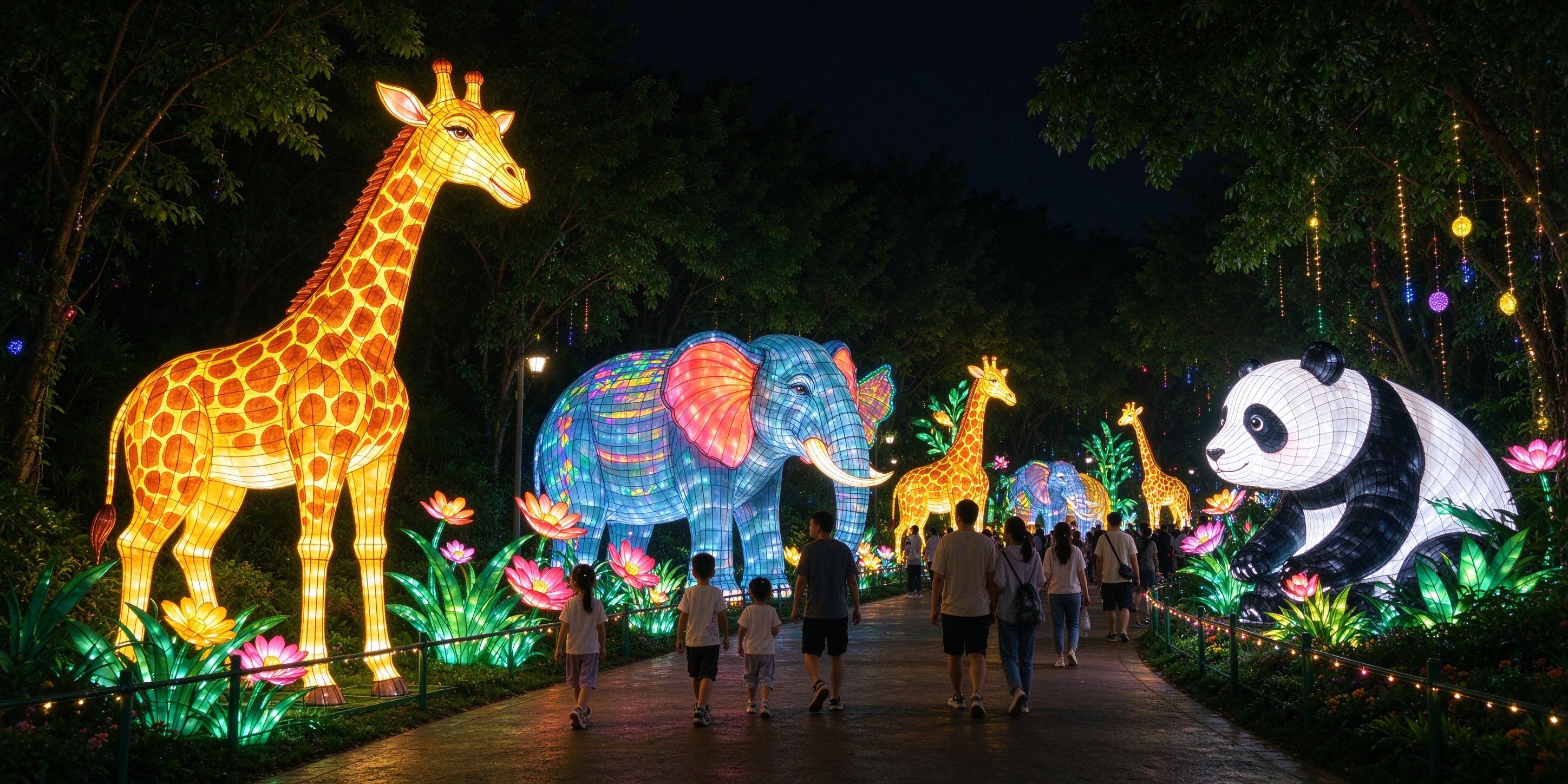
Educational value starts with anatomical accuracy. A lantern that looks like a cartoon approximation undermines the message; a lantern that captures the animal's true proportions, posture and characteristic markings supports it. At our Zigong workshops, zoological lanterns are built from reference photography supplied by the institution, and the details that matter are the ones children notice: the panda's black ear patches and forward-facing eyes, the elephant's trunk curvature and ear shape, the tiger's stripe pattern and powerful shoulder line. Accuracy is also a matter of respect — zoos are trusted institutions, and a misrepresented animal is a small betrayal of that trust.
The African elephant lantern, the Bengal tiger lantern and the giant panda are the three most requested educational hero pieces in zoo events, and for good reason: all three are flagship endangered species with instantly recognizable silhouettes. A well-placed family group — mother and calf elephants, for instance — tells a richer story than a single adult, because it introduces concepts of family structure, maternal care and population decline in one glance.
Conservation Messaging: From Lantern to Action
The lantern gets attention; the signage converts it into understanding. The most successful conservation displays use a layered information design:
- The one-line story. "Fewer than 1,900 giant pandas remain in the wild — and their habitat is recovering thanks to conservation." One sentence, readable in five seconds, emotionally honest.
- The QR deep dive. A QR code linking to the zoo's conservation page, the species' field guide, or a keeper video. Mobile-first learning fits the evening visitor's behavior perfectly.
- The on-ground story. Where possible, the display zone should mention the zoo's own conservation programs and fieldwork — donors give to institutions with credible, visible work.
- The action step. Every conservation message should end with something the visitor can do: symbolically adopt the animal, donate to the conservation fund, reduce a specific consumer behavior, or follow the zoo's conservation channel.
Keeper talks are the highest-value addition. A ten-minute evening presentation beside the peacock lantern — real keeper, real stories, real animals behind the scenes — turns the display zone into a program, and zoos that schedule keeper talks on weekends consistently report them as the highest-rated element of the event. The peacock lantern, with its spectacular illuminated train, is a natural stage for a talk about display behavior, mating and the surprising resilience of wild peafowl.
School Programs and Daytime Extensions
The educational value of animal lanterns does not end at the ticket gate. Zoos extend the impact with daytime school programs: a lantern-themed conservation trail for field trips, a "design your own endangered species lantern" classroom workshop, and a family activity pack that maps the night display to the zoo's curriculum objectives. These programs convert the event from a revenue line into an educational mission deliverable — which matters enormously for grant applications, board reporting and community standing. Several institutions we supply now treat the lantern conservation trail as a permanent educational asset, re-themed annually and cited in their accreditation documentation.
Measuring the Educational Impact
Educational value should be measured like any investment. Pre- and post-visit surveys at the event exit can capture knowledge gain: "Before tonight, did you know tigers are endangered? What is one thing you learned about pandas tonight?" Post-event family surveys measure conversation impact — did the display spark a conversation about conservation at home? — and donation tracking measures conversion: how many visitors who visited the conservation zone later donated, adopted or subscribed. These numbers build the case for next year's event budget and for the event's place in the institution's mission, not just its P&L.
Conclusion
Animal lanterns are the rare attraction that serves the mission and the margin at once. They draw the crowds that fund the institution, and — when designed with anatomical care and paired with layered conservation messaging — they teach the visitors who will become the institution's members, donors and advocates. For zoos and aquariums planning their next light event, the question is not whether to include animal lanterns; it is how much education to build around them. The institutions that answer that question well are the ones whose night events glow long after the lights are packed away.
Build a Zoo Lights Event That Educates
Share your species list and conservation priorities. Our team will design accurate, engaging animal lanterns with a free concept and quotation within 48 hours.
Get a Free Quote☎ +86 13990006666 | ✉ 1712646264@qq.com