A custom lantern is not a product you order — it is a project you run. From the first concept sketch to the night it switches on, a bespoke piece passes through a defined design process that manages expectations, protects budgets and delivers a sculpture that is genuinely yours. This article walks through that process stage by stage, so you know what to expect, what to approve and what to ask for at every milestone.
Stage 1: The Creative Brief
Every successful custom lantern begins with a disciplined brief. The questions that matter are not only "what should it look like?" but "what must it do?" — anchor a plaza, fit a route's hero position, withstand a coastal climate, work with a specific lighting programme, be visible from a distance or invite interaction. A good brief includes the story or theme the lantern must express, the site context (dimensions, sightlines, surroundings), the operating season and climate, and the budget. At this stage, the client and the lantern festival design company align on scope; the brief is the contract's creative foundation.
Stage 2: Concept Sketches
The design team responds with concept sketches — usually several directions rather than one, so the client can react to alternatives. Sketches show the silhouette, the pose, the proportion and the overall mood, and they establish the visual vocabulary: is this a classic silk piece, a modern LED sculpture, or a hybrid? Clients should judge sketches on impact and fit, not on details; details belong to the next stage. This is also the moment to check feasibility signals — a sketch that implies a 15-metre cantilevered wing needs an engineering conversation before the design is loved.
Stage 3: 3D Modelling and Visualisation
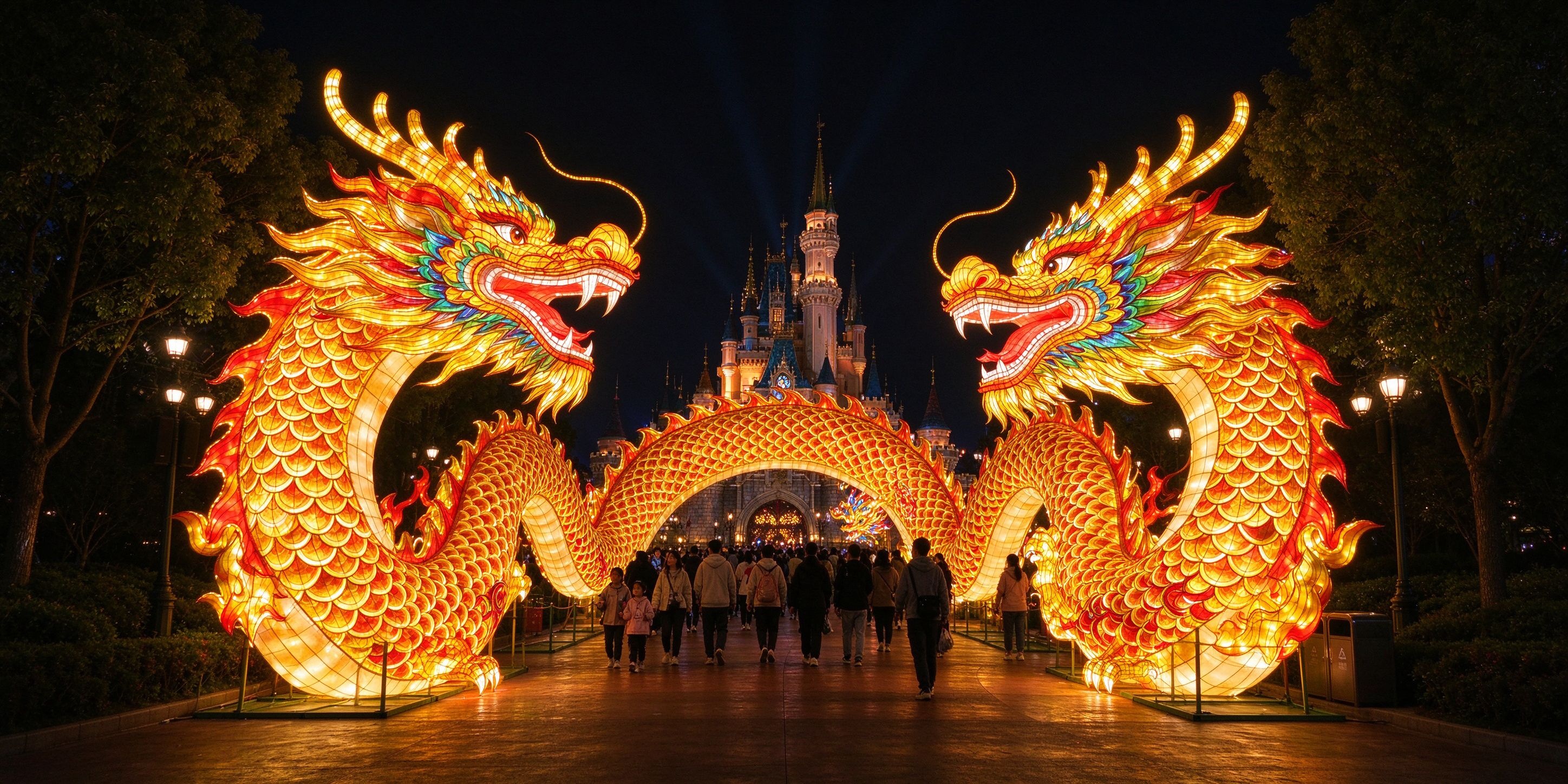
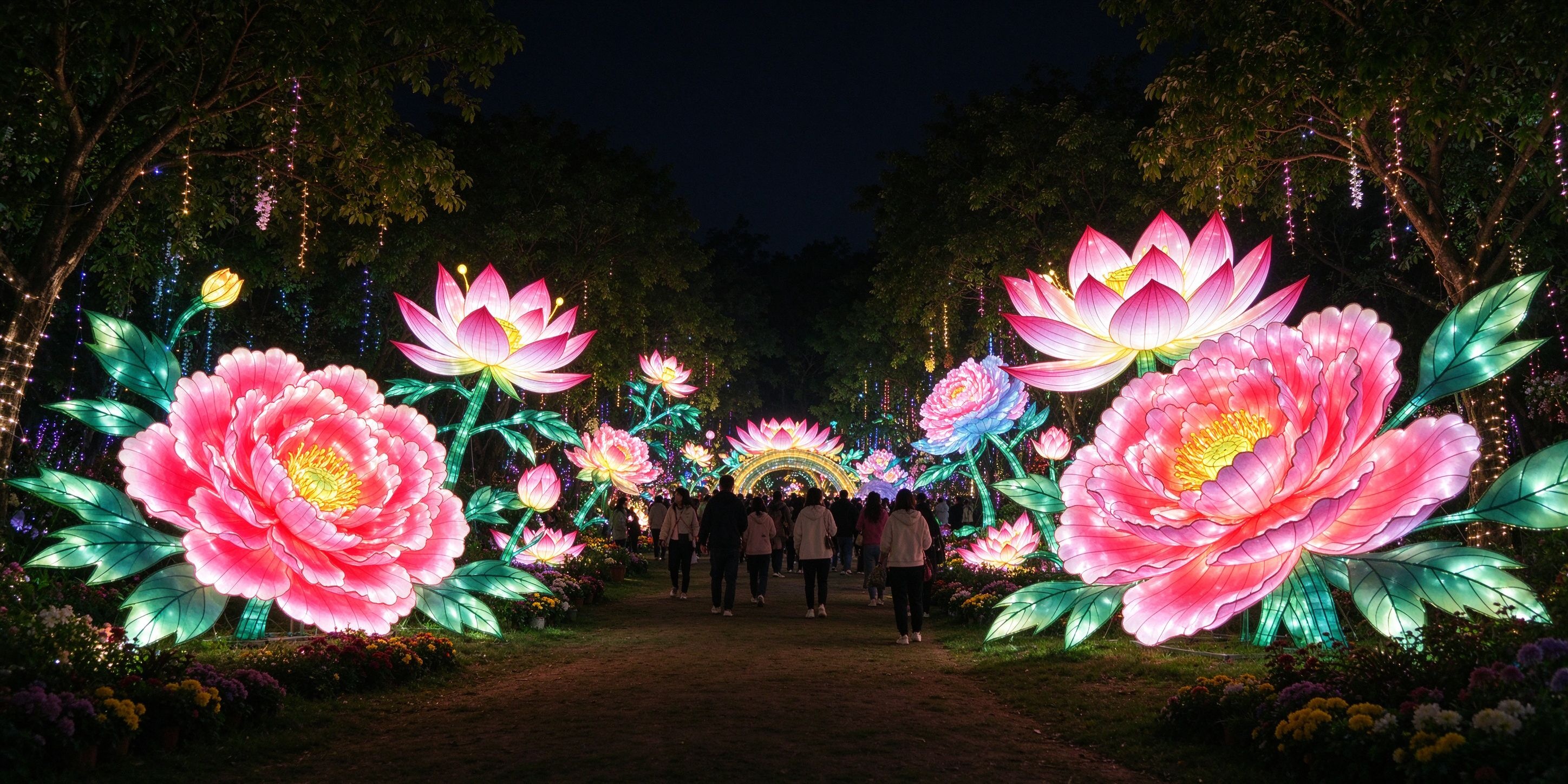
Once a direction is approved, the design is built as a 3D model. This is the single most valuable step in the process, because it replaces guesswork with geometry: the client sees the lantern from every angle, in its site context, with its lighting simulated. For an iconic piece — a golden Chinese dragon lantern stretching 20 metres, a landmark Eiffel tower lantern, a signature giant peony lantern — the 3D model is where clients truly understand what they are commissioning. Approve the model carefully: colour, proportion, lighting pattern and scale all become locked at this point, and changes later are expensive.
Stage 4: Engineering and Structural Design
The artistic model now becomes an engineering document. Structural engineers calculate the steel schedule, wind loading, weight and anchoring requirements; electrical engineers design the lighting circuits, power draw and control system. The output is a manufacturing package: fabrication drawings, a materials list, and a build sequence. For large outdoor pieces this stage is non-negotiable — a custom lantern destined for a public space must carry wind-load and structural calculations for the venue's insurance and permit approvals. Ask your supplier to share the engineering summary; transparency here is a mark of a serious factory.
Stage 5: Fabrication
Production begins with the steel frame: welders form the skeleton from the engineering drawings, section by section, with modular joints so the finished piece can ship and assemble on site. The frame is sandblasted and coated against corrosion. Next, the covering — silk or waterproof acrylic — is stretched and stitched over the frame by skilled craftspeople, and artists hand-paint the panels: scales, petals, features and gradients that give the piece its character. Throughout fabrication, the client receives milestone photos, so the design approval carries through to the physical build without drift.
Stage 6: Lighting and Programming
LED modules are installed inside the frame, wired into distribution boxes with IP65 waterproof connectors, and connected to the control system. For animated pieces, this is where the magic is programmed: colour sequences, chase effects, breathing light, motion. The control system should be reprogrammable on site, so the venue can vary the display across the season — a festive mode for the new year light display, a softer mode for a lunar new year lanterns cultural programme. Every circuit is tested for continuity, insulation and correct sequence behaviour before the piece is approved for packing.
Stage 7: Quality Control and Burn-In
Before shipping, the finished lantern runs the factory's QC sequence: 48-hour LED burn-in, full illumination inspection, structural verification and documentation. Clients receive test reports, installation drawings, wiring diagrams and compliance certificates with the shipment. This stage is the difference between a custom lantern that performs and one that fails on opening night — and it is why we insist on protecting it from schedule pressure.
Stage 8: Delivery and Installation
Custom lanterns ship in modular crates by sea or air freight, with customs documentation handled by the factory. On site, the venue's crew assembles the sections using the supplied drawings and installation manual, with remote video guidance from our engineers where needed. A full-night illumination test before opening confirms every circuit and sequence before the public arrives. For very large installations, our team can attend on site to supervise or complete the build.
Timeline and What It Means for You
Plan the process around the calendar. A typical custom project runs: brief to concept, 2 to 4 weeks; concept to 3D approval, 2 to 3 weeks; engineering, 1 to 2 weeks; fabrication, 4 to 8 weeks for standard custom pieces (longer for very large or complex sculptures); QC and shipping, 1 to 3 weeks; and installation, 1 to 3 weeks on site. Starting the conversation four to six months before your opening date protects every step — and the earlier the design is locked, the more the factory can focus its craft on the finish rather than the rework.
Conclusion
The custom lantern design process turns a story into a steel-and-silk reality through eight disciplined stages: brief, concept, 3D model, engineering, fabrication, lighting, quality control and installation. The process protects your budget, your schedule and your vision — provided you choose a partner who runs it with rigour. Our design studio has taken custom lanterns from sketch to full-scale production for clients worldwide since 2002, and we would be glad to start your project with a free concept consultation.
Ready to start your project? Contact the Lantern Festival team at our contact page or call +86 13990006666 for a free consultation and quotation within 48 hours.