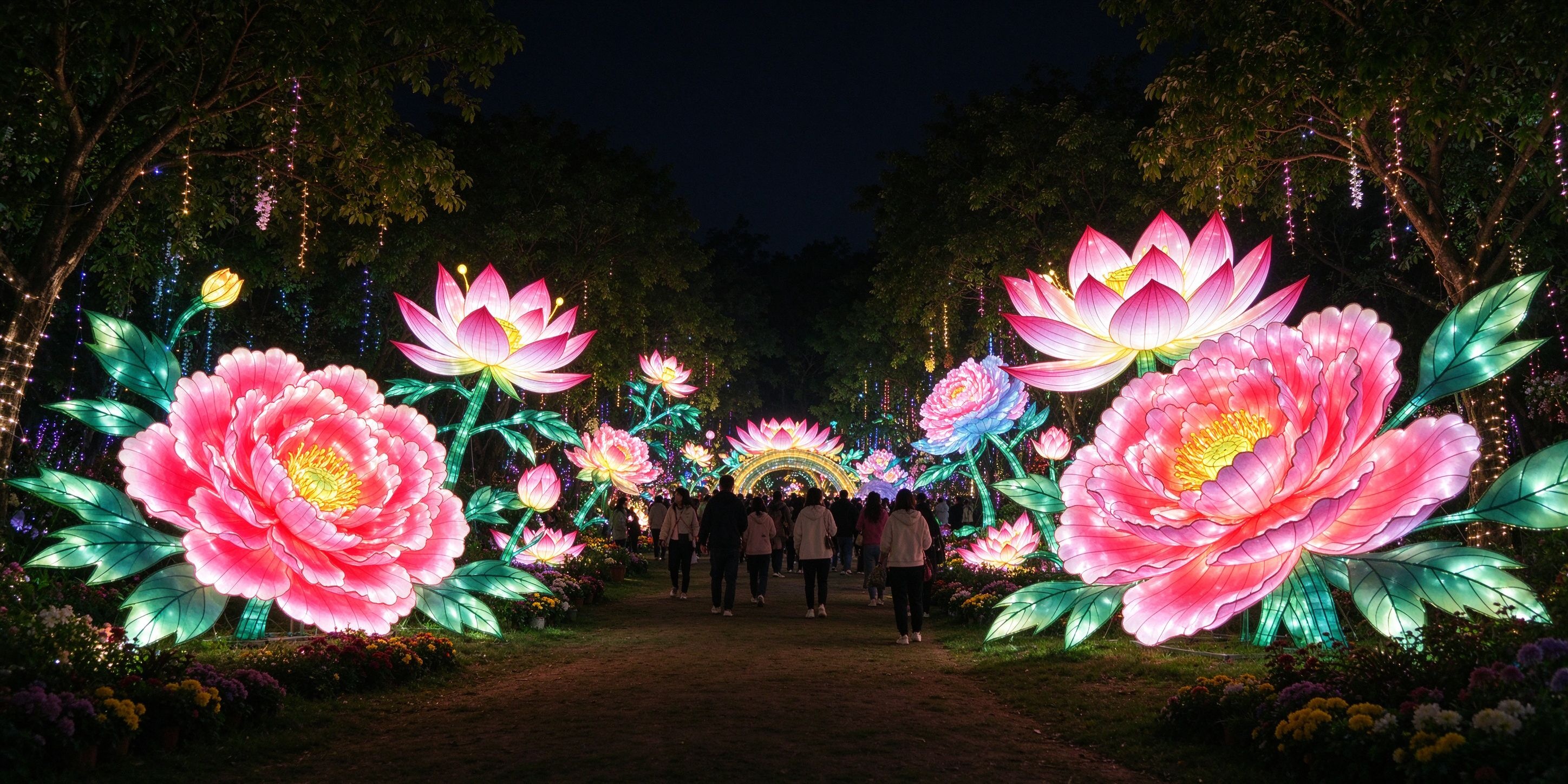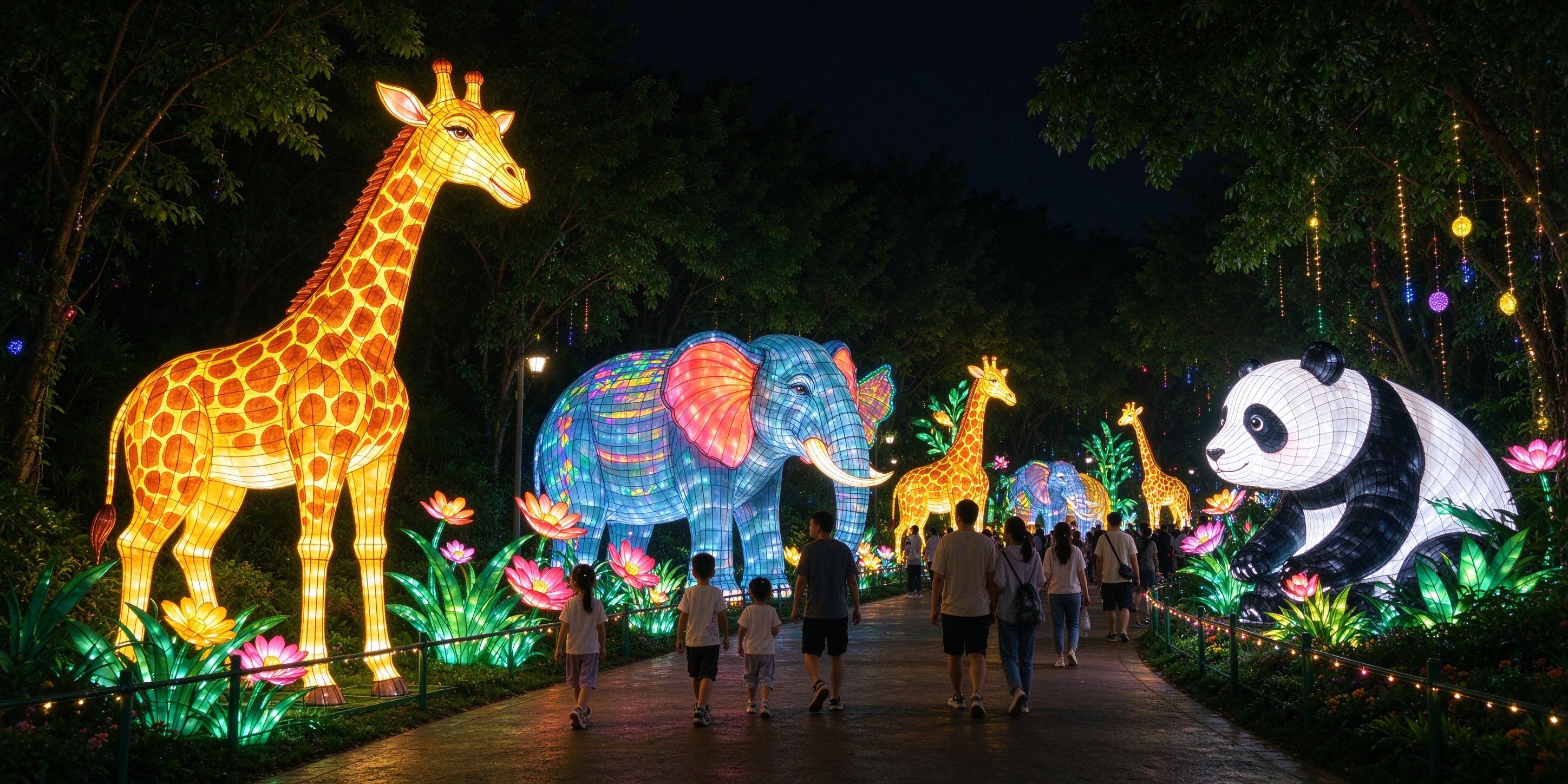
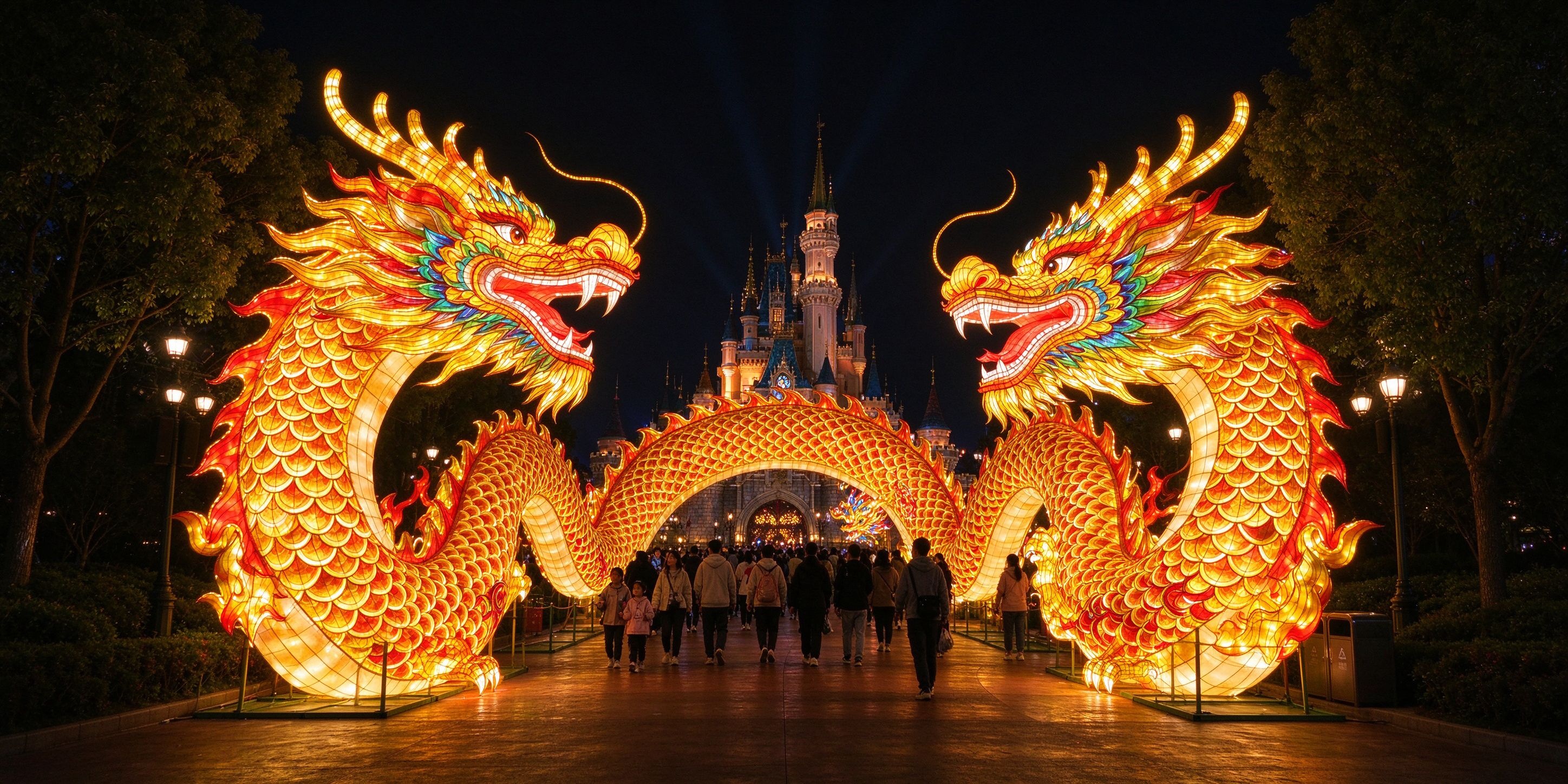
Behind every breathtaking lantern festival lies a production line that most visitors never see. A 20-metre dragon lantern is not sculpted in one piece; it is the output of a carefully sequenced process that combines industrial steel fabrication with centuries-old silk craft. This article takes you inside a Zigong lantern factory — the home of the Chinese lantern industry — to explain exactly how a festival lantern moves from CAD file to finished, shipping crate.
Stage 1: Design and Engineering
Every lantern begins as an idea. Our design team translates the client's theme into concept sketches, then into engineering drawings and 3D models. This stage is where the physics is decided: the lantern's overall dimensions, the structural steel schedule, the wind-load assumptions, the weight, and the number of lighting circuits. For a large sculpture, the engineering review is as important as the art, because a beautiful lantern that cannot survive a gust of wind or a winter storm is a liability rather than an asset. The output of this stage is a manufacturing package — drawings, materials list and a production schedule — that the workshop follows to the millimetre.
Stage 2: Steel Frame Fabrication
The skeleton of every lantern is welded steel. Skilled welders bend, cut and join steel tube and rod into the silhouette of the finished piece — the body of a panda, the coils of a dragon, the petals of a peony. This is demanding work: the frame must hold its shape under its own weight, resist wind loading, and provide anchor points for the silk covering and the lighting harness. Frames are fabricated in modular sections so that a 30-metre dragon can be shipped in pieces and bolted together on site. After welding, the frame is sandblasted and coated against corrosion, because outdoor lantern displays live through rain, frost and humidity.
Stage 3: Covering with Silk
With the frame complete, the lantern enters its most recognisable stage: covering. Artisans stretch silk — or, for larger and more durable pieces, waterproof acrylic — over the frame and stitch it into place with pre-stitched ties and seams. This is where the lantern gains its colour and its life. In traditional practice, panels are coloured with dye and painted by hand, layer by layer, so that light passing through the fabric creates depth rather than a flat glow. A single large lantern can require dozens of hand-stitched panels and several days of covering work. The same craft that illuminated Chinese festivals centuries ago still defines the finish quality of a premium spring lantern festival piece today.
Stage 4: Painting and Detailing
Covered panels are then hand-painted by artists who specialise in the fine details: a tiger's stripes, a dragon's scales, a lotus petal's gradient. This stage gives each piece its character and ensures the lantern looks as striking in daylight as it does illuminated at night. For clients commissioning a red round lantern for a chinese new year lantern display or a giant flower lantern for a summer garden event, the painting quality is usually the difference between a good display and a memorable one. Paint systems are chosen for weather resistance, with UV-stable pigments that resist fading across a full display season.
Stage 5: LED Installation and Wiring
Modern lanterns are lit from within by LED modules — typically 12V or 24V DC strings and boards wired into a central control system. The lighting design is planned in Stage 1, but installation happens now: every LED module is fixed inside the frame, pointed through the covering, and wired into distribution boxes with waterproof connectors. This is also when animation is added. A giant peony lantern may open and close its petals; a dragon lantern may breathe light in colour sequences; control signals from a DMX controller drive the whole effect. All wiring follows the voltage and IP65 waterproofing standards required for outdoor commercial use, and every circuit is labelled for the installation team.
Stage 6: Quality Control and Burn-In Testing
Before anything ships, the factory runs a quality-control sequence that mirrors the conditions of use. Every LED module is aged — burn-in tested for 48 hours to catch early failures. Every lighting circuit is tested for continuity, insulation and correct function of all sequences. Silk panels are inspected under full illumination for even light distribution and colour accuracy. Large sculptures receive a structural check, and documentation — assembly drawings, wiring diagrams, installation manuals and compliance certificates — is packed with the shipment. Clients who visit the factory routinely remark that the QC stage is where our 24-year track record is made, not in the glamour of the design stage.
Stage 7: Packing and Shipping
Lanterns ship in reinforced export crates designed for sea or air freight. Modular frames travel flat and compact; silk panels are rolled and protected; LED modules and controllers are packed in moisture-barrier packaging. A standard festival order of several dozen lanterns packs into a handful of 40-foot containers, with the base and head modules of each sculpture separated for safe handling. Our logistics team coordinates customs documentation and delivery windows, and installation engineers provide remote video guidance during on-site assembly.
Why Process Matters to Buyers
Understanding the manufacturing process is not academic — it protects your procurement. When you know that a quality lantern requires engineering drawings, corrosion-treated frames, hand-stitched silk and 48-hour burn-in testing, you know what questions to ask any festival lantern manufacturer. Request production milestone photos, ask for the burn-in test protocol, and confirm the coating and paint systems used. The factory that can show you its process is the factory that will deliver a display that survives its first season — and returns for many more.
Conclusion
From steel frame to silk masterpiece, a festival lantern is the product of seven disciplined stages: design, framing, covering, painting, lighting, quality control and logistics. Each stage carries the knowledge of an industry that has been perfecting illuminated celebrations in Zigong for generations and, since 2002, for clients in more than forty countries. When you commission your next display, ask for the process — and choose a partner whose workshop can prove it.
Ready to start your project? Contact the Lantern Festival team at our contact page or call +86 13990006666 for a free consultation and quotation within 48 hours.