Mid-Autumn Festival Lantern Celebrations: Global Traditions and Commercial Opportunities
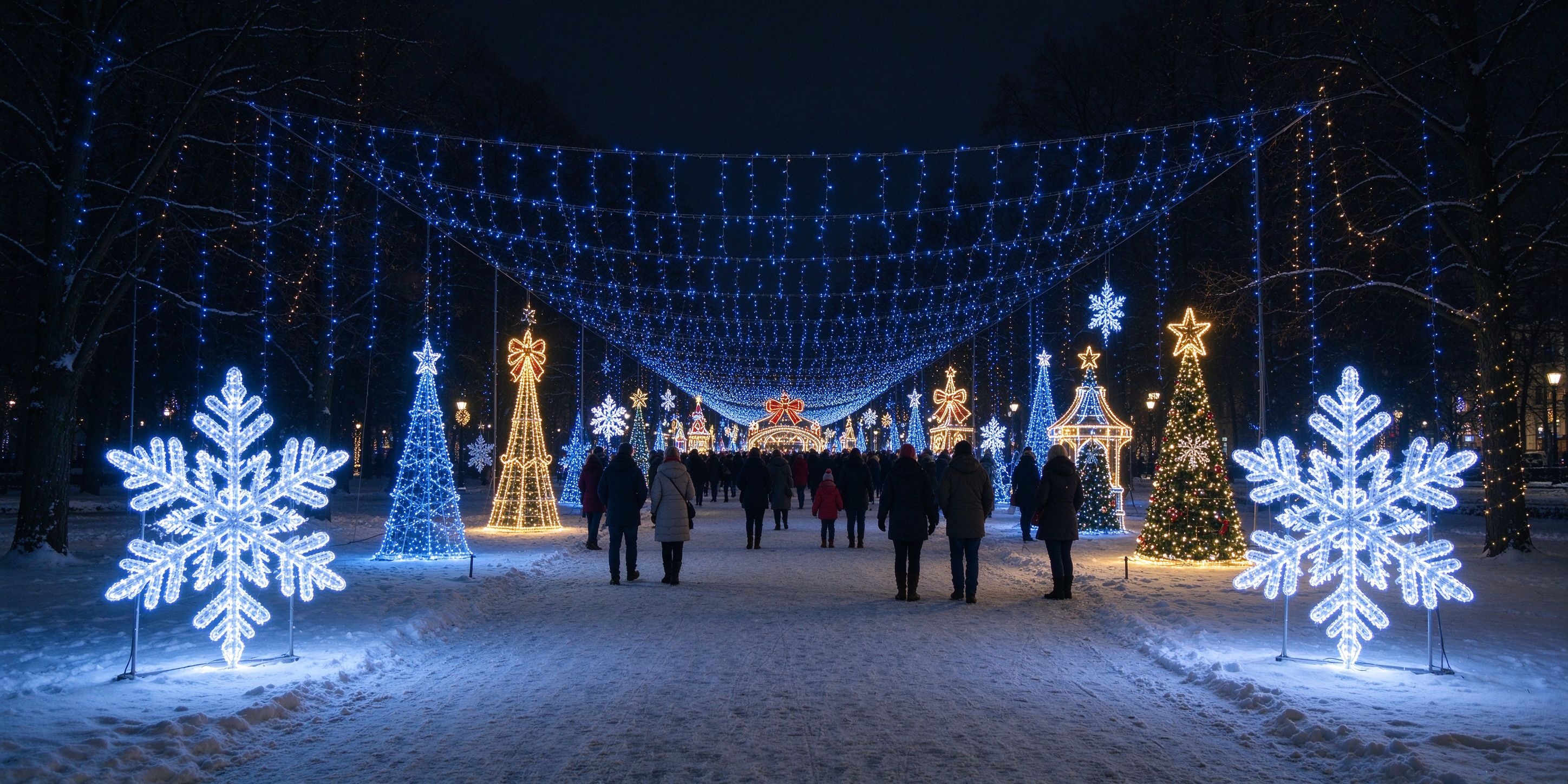
When the autumn moon is full, half of Asia lights up. The Mid-Autumn Festival — the moon festival — is the second great lantern holiday of the Chinese calendar, and unlike the winter festivals that dominate Western event calendars, it falls in September or October, at the start of the fall event season. For venue operators, this timing is an open door: a mid autumn lantern celebration can anchor the autumn calendar, capture the back-to-school and pre-holiday traffic window, and reach one of the world's largest and most culturally connected consumer communities. This guide explores the traditions behind the holiday and the commercial formats that turn them into successful events.
The Traditions: Moon, Reunion and Lanterns
The Mid-Autumn Festival falls on the fifteenth day of the eighth lunar month, the night of the year's fullest, brightest moon. Its core value is reunion: families gather, return home from distant cities, and share mooncakes — dense pastries that symbolize completeness and unity, since the round mooncake mirrors the round moon. The festival's folklore is rich with lantern imagery: the story of Chang'e, the moon goddess who drank the elixir of immortality and floated to the moon, is accompanied by the Jade Rabbit who pounds the elixir of life beneath a cassia tree. Every one of these figures — goddess, rabbit, moon palace, cassia tree — is a ready-made lantern subject, and together they form a complete visual world for designers.
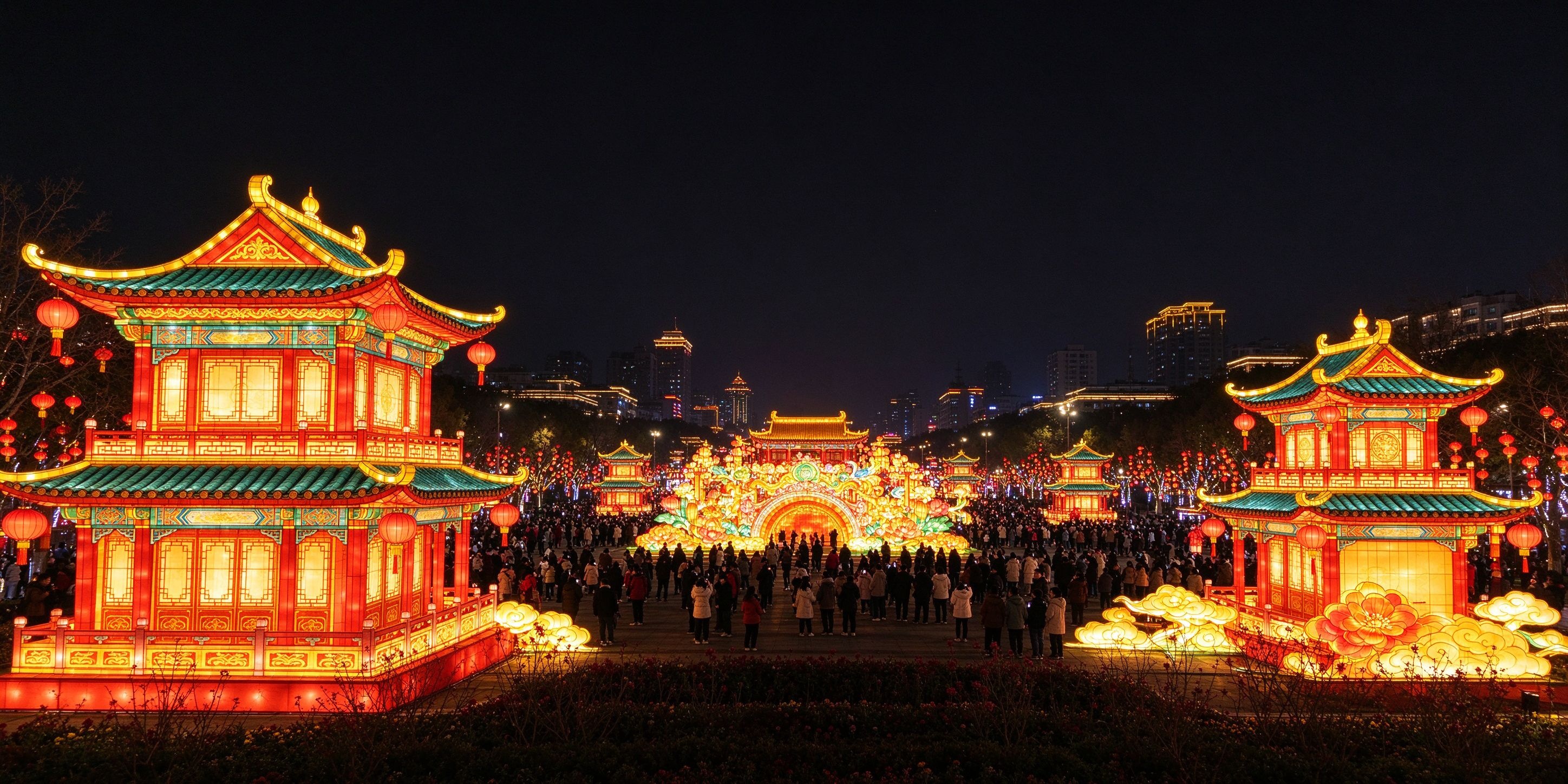
Lanterns themselves have always been central to the celebration. Children carry handheld lanterns in processions, families release sky lanterns (a practice now restricted in many places for fire safety), and public spaces fill with illuminated displays. The festival's lantern vocabulary is distinct from the Chinese New Year's: where New Year is red, gold and explosive, the Mid-Autumn palette is softer and more celestial — moon white, lotus pink, jade green, and the silver-gold of moonlight. The signature symbols are the rabbit, the moon palace, the lotus, the osmanthus flower and the full moon itself, and a well-designed display composes these into a dreamy, luminous moon-scape rather than a bustling street fair.
A Festival Without Borders: Regional Variations
The Mid-Autumn Festival is celebrated across East and Southeast Asia, and each culture adds its own lantern tradition — a fact that matters commercially because it means a mid autumn lantern event has authentic resonance far beyond China. In Vietnam, the festival is known as Tết Trung Thu and is above all a children's festival: star-shaped lanterns, carp lanterns and lion dances fill the streets, and the carp — which transforms into a dragon in folklore — is the emblem of students' success. In Singapore and Malaysia, the festival is a major multicultural event with lantern displays in public gardens and Chinatown street fairs. Korea celebrates Chuseok at the same full moon with ancestral rites and moon-viewing, and Japan marks Tsukimi with moon-viewing parties and displays of pampas grass and rice dumplings.
For an event operator, this breadth is an opportunity and a discipline. An authentic celebration can draw from multiple traditions — Vietnamese star lanterns, Chinese moon palaces, Korean moon-viewing aesthetics — to create a pan-Asian experience that resonates with a multicultural audience. But the discipline is the same as with any cultural event: use the traditions with respect and accuracy, and where possible collaborate with local community groups so the event is endorsed by the people it represents.
Commercial Formats: Where Mid-Autumn Lanterns Earn Their Keep
Because the festival falls at the start of autumn, it slots neatly into venue calendars that are otherwise quiet between summer and the holiday season. The formats that work:
- Mall and retail celebrations. Shopping centers build mooncake-branded atrium displays, children's lantern-making workshops and moon-viewing photo moments. The display extends the mall's evening traffic and gives tenants a co-marketing hook around the biggest gifting occasion of the Asian retail calendar.
- Botanical garden moon festivals. Gardens are the natural home for the festival's dreamy aesthetic. A mid-autumn moon palace lantern as the hero piece, rabbit lanterns in the lawns, lotus displays on the ponds and a full-moon finale night create a fall event that competes with the spring lantern festival for attendance.
- Hotel and resort experiences. Hotels in Asia and in cities with large Asian communities use the festival for themed dinners, poolside lantern displays and family packages. A compact display — a moon palace, a lotus pond, a lantern walk — transforms the property for the night without a large capital outlay.
- Community and cultural festivals. Cities with significant Asian populations program public celebrations with lantern parades, food streets and performances, often around a central illuminated installation.
The lotus pond lantern deserves special mention: the lotus is the festival's signature aquatic flower, and a pond of glowing lotuses is one of the most cost-effective hero installations available, working beautifully in gardens, hotels and mall water features alike.
Designing the Mid-Autumn Display: Palette and Icons
Design success depends on honoring the festival's mood. Use moonlight-inspired palettes — warm white, soft gold, blush pink, jade — with gentle, slow animation rather than fast chases; the moon festival is contemplative, and the lighting should breathe. The iconography does the storytelling: a giant luminous moon disc behind the hero piece, the koi fish lantern for prosperity and perseverance, rabbits at child height for the youngest visitors, and osmanthus or chrysanthemum accents (chrysanthemum lantern is the festival flower) for authenticity. Interactive touches — a lantern-riddle wall, a mooncake-tasting corner, a paper-lantern-making station — convert the display into a family occasion and give visitors a reason to linger.
Operationally, the format borrows the best practices of any light event: timed entry if the venue is compact, programming a full-moon finale night as the premium ticketed moment, and building the food-and-retail flow around mooncake sales, which carry high margins. The festival's two-to-three-week commercial window is short, so the marketing campaign should mirror the Chinese New Year playbook in miniature — announce early, open pre-sales three weeks out, and concentrate media spend on the final ten days.
Conclusion
The Mid-Autumn Festival is the most under-used lantern holiday in the commercial calendar. It carries deep cultural meaning across a vast region, it arrives at a commercially valuable moment of the year, and its aesthetic — moonlit, contemplative, family-centered — is distinct from every winter festival. For malls, gardens, hotels and cities serving Asian and multicultural audiences, a mid autumn lantern celebration is a low-competition, high-affection event that can anchor the autumn season for years. The tradition is ancient; the commercial opportunity is still being discovered.
Build Your Moon Festival Display
Tell us your venue and target dates. Our designers will prepare a moon-themed concept, quotation and delivery plan within 48 hours — in time for this year's full moon.
Get a Free Quote☎ +86 13990006666 | ✉ 1712646264@qq.com