Outdoor Lantern Festival Weather Resistance: Designing for Rain, Wind, and Snow
Every outdoor lantern festival eventually meets weather it did not plan for. A 25-meter dragon lantern in a 60 km/h gust, a flower lantern sitting in standing water after an overnight storm, a snowflake cluster sagging under wet snow — these are the failures that close events, injure reputations and burn budgets. The difference between a display that survives a season and one that collapses in week two is not luck; it is specification. This guide explains how professional manufacturers engineer weather resistance into outdoor light displays, and what buyers should demand in a specification before signing a contract.
Rain: Waterproofing Is a System, Not a Rating
The IP (Ingress Protection) code is the first number buyers learn — and the most abused. "IP65" means protected against dust and against low-pressure water jets, which is the sensible minimum for outdoor festival lanterns. But a rating printed on a spec sheet means nothing unless every component in the chain carries it: the LED modules, the wiring connectors, the junction boxes, the control cabinet and the power feeds.
Ask three questions of any supplier:
- Are the connectors IP-rated or merely "waterproofed"? Heat-shrink sleeving and silicone sealant are common cost-cutting shortcuts. Industry-standard IP67 waterproof connectors on every cable joint are the correct answer.
- Where does water drain? A lantern shell with no drainage points becomes a pool. Proper designs angle internal frames so condensation and ingress drain out, and specify drainage holes in fabric skins that would otherwise balloon and tear in a downpour.
- Is the control cabinet rated for the environment? Outdoor cabinets need IP65 enclosures with thermostatic ventilation — sealed boxes cook electronics in summer and frost them in winter.
For water-side themes, the engineering bar is higher still. A water dragon lantern installed over a pond or fountain must isolate all low-voltage electronics above the splash zone and use marine-grade cable glands; splashing is not the same as immersion, and buyers should verify which one the quote covers.
Wind: The Force That Lifts and Shatters
Wind is the most dangerous threat to an outdoor lantern festival because it attacks the two things lanterns do best: being tall and being fabric-covered. Every large lantern acts like a sail, and the force grows with the square of wind speed — a 30 km/h breeze exerts four times the load of a 15 km/h one.
Professional engineering handles wind in three layers:
- Structural calculation. The steel frame must be designed against a defined wind speed — typically the 50-year return gust for the region, or a stated operational limit such as 80 km/h. The manufacturer should provide signed load calculations, not assurances.
- Venting. Solid fabric panels catch wind like spinnakers. Proper lantern design includes engineered vents and loose-laced panels that spill air, dramatically reducing effective sail area without visible impact at night.
- Anchoring. Large pieces need ground anchors or ballast calculated from the overturning moment. A lotus flower lantern on a plaza, for example, may look self-weighted, but a tall bloom cluster still needs a ballast plan — and the plan must be in the installation manual, not improvised on site.
Buyers should also demand a wind protocol: at what sustained speed does the operator power down, and which elements are rated to stay up through a storm? A serious supplier ships this as part of the manual.
Snow: Weight That Accumulates Silently
Snow fails lanterns in a sneakier way than wind: it adds weight gradually, loading flat and near-horizontal surfaces — canopy tops, arch roofs, animal backs — until a member bends or a fabric seam splits. For cold-climate events, specify:
- Snow-load rated frames for canopies and tunnels, engineered to the local ground snow load code (typically 1.0–2.4 kN/m² depending on region).
- Smooth, pitched surfaces on large pieces so snow slides rather than accumulates, and reinforcement stitching on horizontal fabric runs.
- Heated or sloped cable runs where ice could form and drag connections apart.
The practical counterpart is a snow-removal schedule: most festival operators invest in long-handled soft brushes and a rule that light towers are cleared before each evening session. Where snow sits for weeks, as in northern European or Canadian events, the fabric specification matters too — treated polyester sheds snow better than untreated silk-blend skins.
Sun and Temperature: The Slow Killers
UV is the enemy buyers never see because the damage happens between seasons. Twelve weeks of strong summer sun can fade a standard fabric skin and embrittle unrated cable insulation, so a display bought for a winter festival but stored through summer needs UV-stabilized fabrics and cable rated for outdoor exposure, not indoor-grade PVC. Temperature swing is the second hidden factor: steel and aluminum expand and contract, and frames left with no expansion provision will work their joints loose over a season. Specify slotted bolt holes and check torque on anchor bolts at the season midpoint.
Electronics dislike extremes even more than structures. Specify LED drivers rated for the full operating range of the venue (commonly −20°C to +50°C), and remember that cold-starting a control system with cheap capacitors is a classic early-season failure. Professional suppliers bench-test their control racks across the temperature range and document it.
The Tunnel and Canopy Case
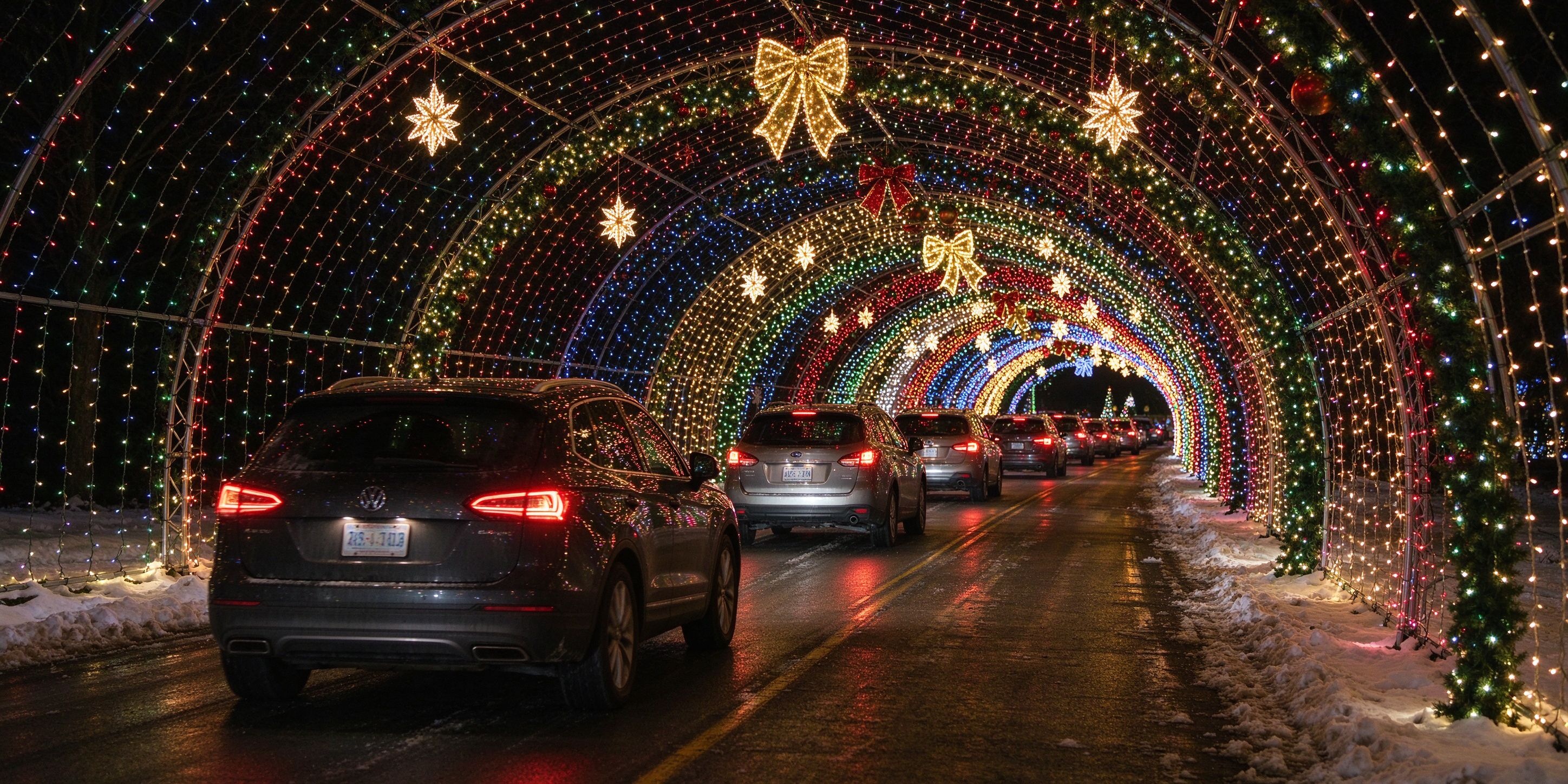
Tunnels and canopies deserve special attention because they combine height, surface area and visitor shelter. A LED light tunnel is one of the most popular pieces in any outdoor lantern festival, yet it is also the most weather-exposed long-span structure on site. Demand that tunnel frames carry both wind and snow calculations, that the arch sections have positive drainage, and that entry/exit zones have non-slip flooring treatment when wet. The same logic applies to the light waterfall sculpture and similar vertical pieces: their beauty comes from dense lighting, and dense lighting is exactly what needs the most waterproofing discipline.
Conclusion
Weather resistance is not a feature you add to an outdoor lantern festival; it is the difference between an event and a liability. Buy from manufacturers who can show you wind-load calculations, IP-rated component lists, snow-load frames and UV-stabilized materials — and who put the operating limits in the manual. The extra cost of proper engineering is a rounding error next to the cost of a mid-season failure. Specify for your worst day, and every good day takes care of itself.
Engineer Your Display for Real Weather
Send us your venue's climate data and site plan. Our engineers will confirm wind, snow and waterproofing specifications and provide a free quotation within 48 hours.
Get a Free Quote☎ +86 13990006666 | ✉ 1712646264@qq.com