A winter lights festival is a season-long operation built on a year-long plan. The venues that open smoothly and turn a profit do not start planning in October; they start the previous autumn, working a twelve-month calendar that sequences design, budgeting, supplier selection, production, compliance and launch. This guide lays out that calendar, the budget structure behind it, and the vendor selection checklist that protects your opening date.
The 12-Month Timeline
Month 12 to 10: Concept and Feasibility
Define the event's purpose, audience and dates. Will this be a winter light trail through a botanical garden, a family festival at a park, or a commercial display at a mall? Establish the venue's night-time capacity, the power situation and the target ticket economics. This is the month to set the headline numbers: expected attendance, break-even ticket price and the budget ceiling.
Month 10 to 8: Budget and Supplier Selection
Build the budget with the cost blocks described below, and begin vendor conversations. The light festival supplier should be selected at month 10 at the latest, because production lead times — 30 to 45 days for standard pieces, longer for custom — are the schedule's longest dependency. Evaluate suppliers against certification, engineering, lead time, shipping and after-sales criteria before signing.
Month 8 to 6: Design and Production Kick-Off
Finalise the route plan, approve designs and confirm the equipment list. Order standard pieces early to protect factory capacity, and lock custom hero pieces now. Confirm power distribution design and site preparation requirements with the venue.
Month 6 to 3: Production and Compliance
Production runs through the winter-factory season. Monitor milestone photos, prepare permits, insurance and compliance documentation, and finalise the marketing and pre-sale plan. This is also the time to book installation crews and any crane hire.
Month 3 to 1: Installation and Soft Launch
Install in the three to four weeks before opening, following the sequence of power, structures, covering, lighting and programming. Run a full-night test, then a media and VIP soft launch two nights before the public opening.
Opening to Close: Operations
Operate the nightly rhythm: pre-open safety sweep, weather management, staffing and incident logging. Review revenue and attendance weekly, and adjust marketing and pricing levers while the season is live.
Budget Allocation
Every winter lights festival budget is different, but the proportions are remarkably consistent across successful events:
- Display equipment and shipping: 45 to 60 percent — lanterns, tunnels, arches and supporting pieces. Specify for reuse across multiple seasons.
- Site and power: 10 to 15 percent — ground preparation, power distribution, cabling and connection.
- Installation and dismantling: 8 to 12 percent — crew, cranes and transport.
- Marketing and ticketing: 8 to 12 percent — creative, platform fees and media.
- Permits, insurance and compliance: 5 to 8 percent.
- Operations and contingency: 10 to 15 percent — staffing, utilities, spares and the weather buffer.
Hold 10 to 15 percent as contingency. The two most common budget shocks in winter events are weather-driven lost nights and last-minute compliance costs; both are manageable when planned for.
Equipment Selection for a Winter Route
The route is the product, and its equipment should be chosen to create a journey: an entrance statement, themed zones, immersive moments and a finale. Core components that perform consistently in winter conditions include:
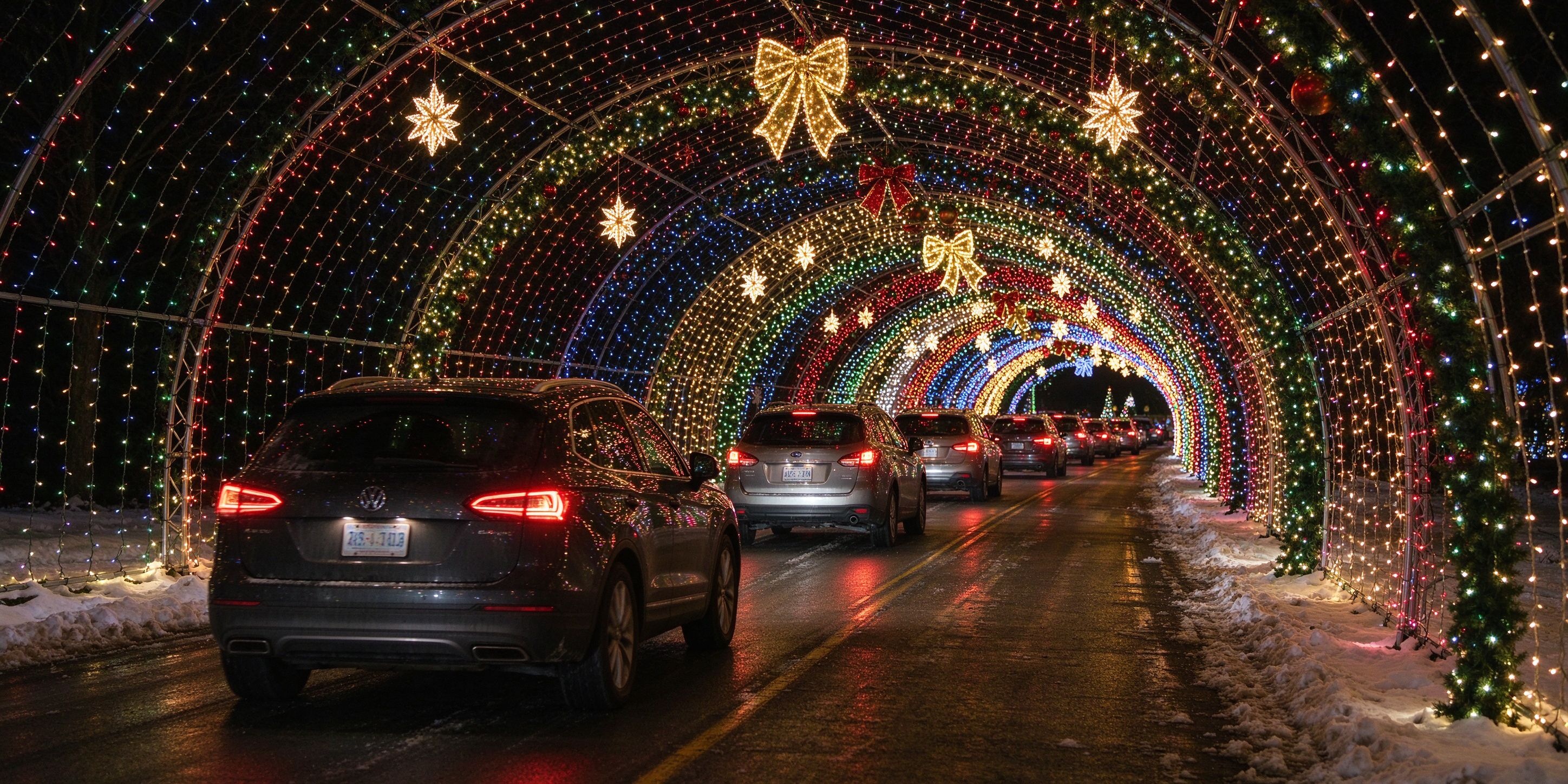
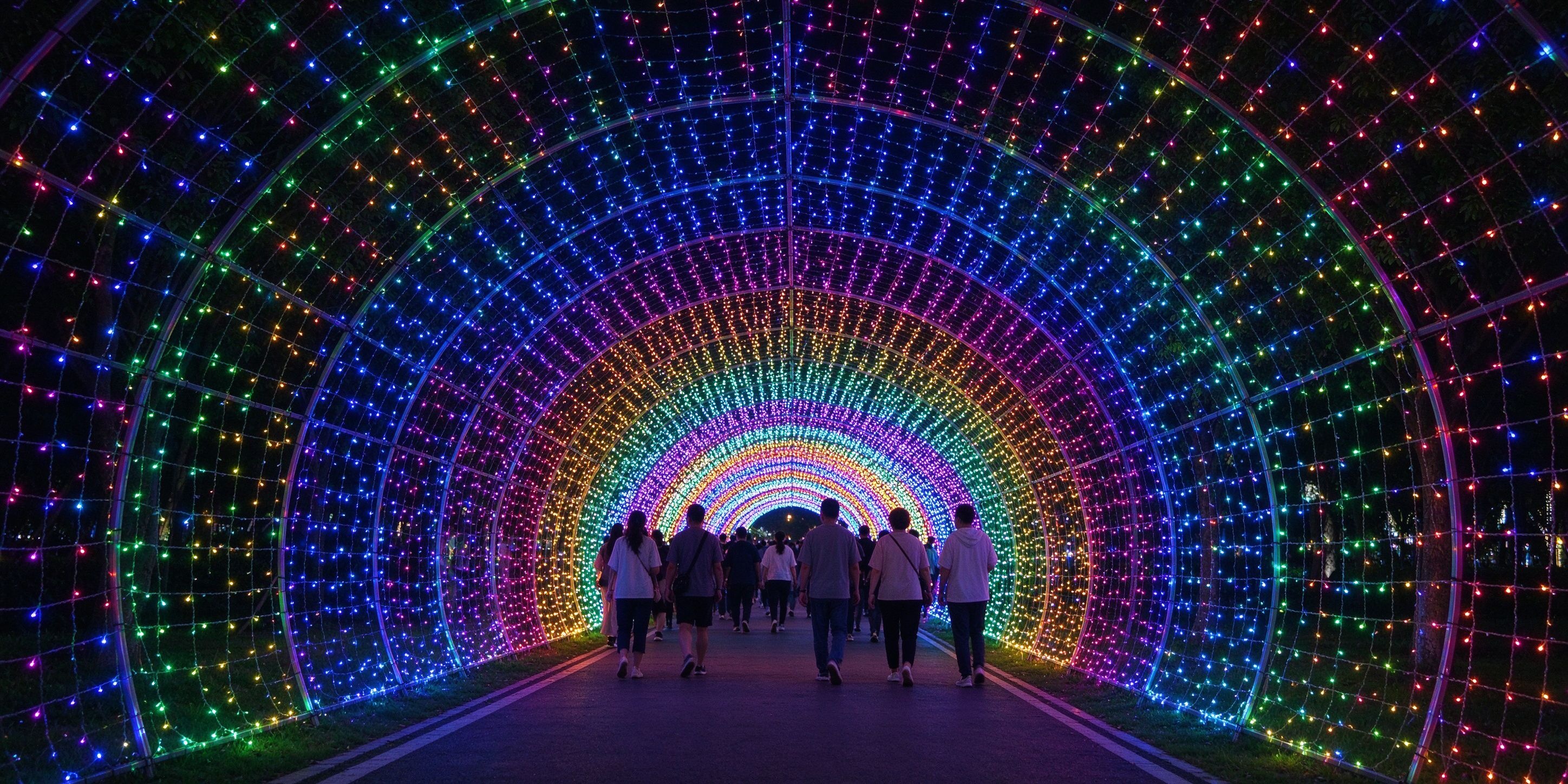
- Light tunnels and archways: the highest-photograph zones; our LED light tunnel and light archway installation are winter workhorses.
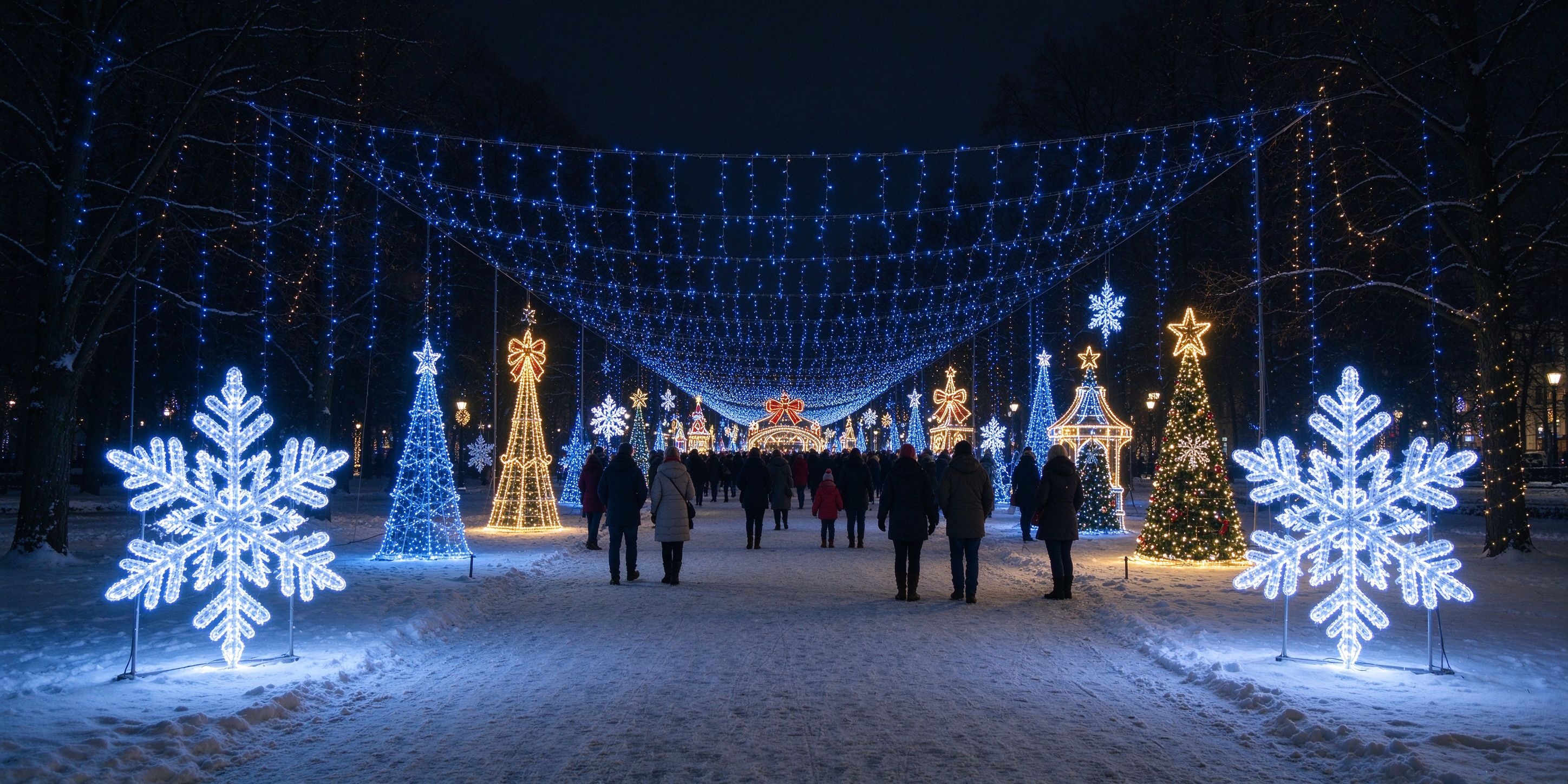
- Holiday hero pieces: a giant Christmas tree lantern anchors the festive zone; snowflake cluster lanterns fill the sky and suit any winter theme.
- Ground-level and canopy fills: snowflakes, glowing paths and light curtains make the whole route feel continuous.
- Interactive elements: a small interactive zone adds dwell time without dominating the budget.
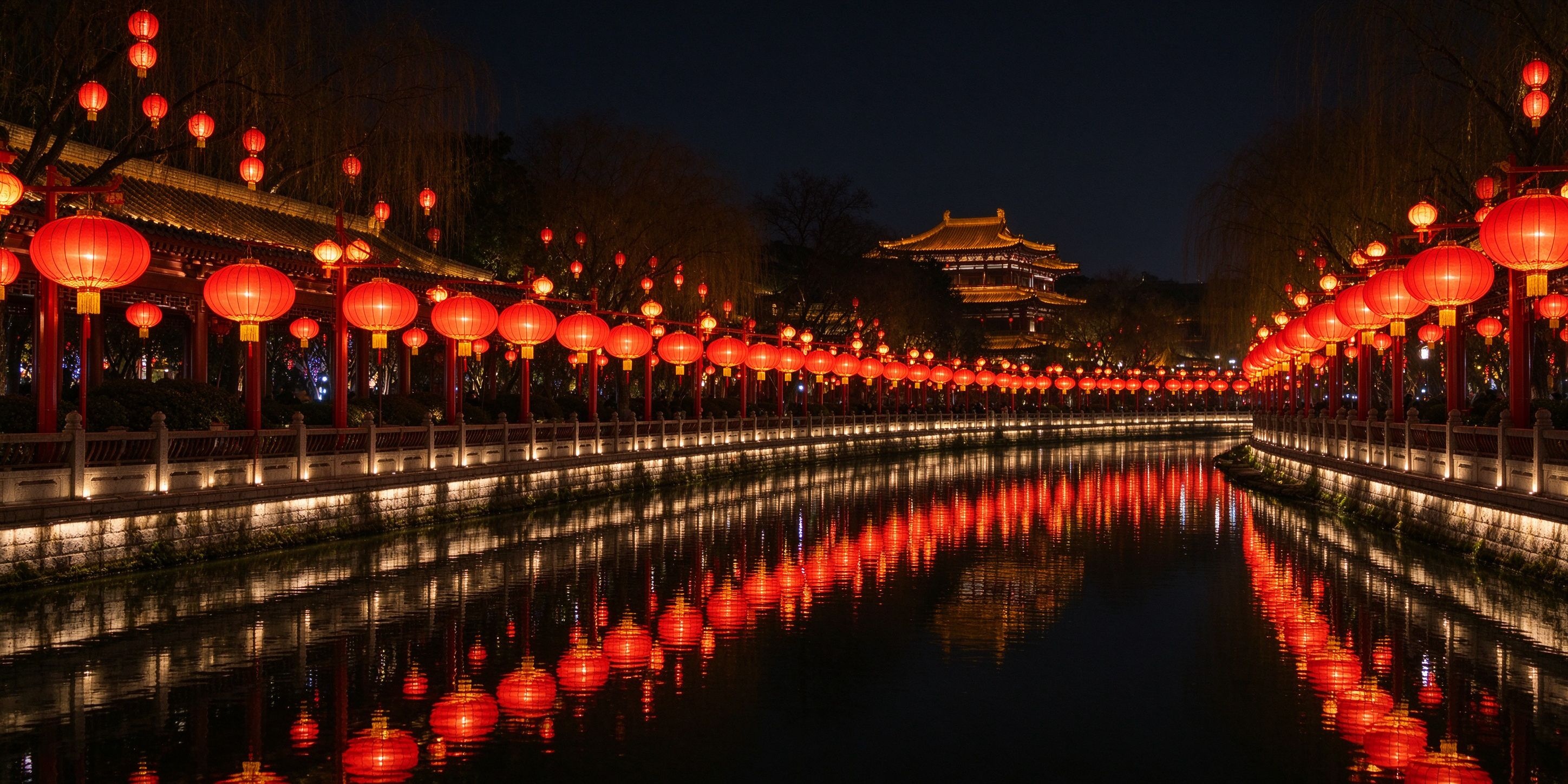
All outdoor equipment should be IP65-rated, built for frost and wind, and supplied with installation drawings and structural documentation. If the season extends into a new year light display or chinese new year lantern programming, choose modular themes that can be swapped without rebuilding the route.
Vendor Selection Checklist
- CE/UL certification and IP65 documentation for all lighting.
- Wind-load and structural calculations for large pieces.
- Milestone production schedule with photos.
- Realistic lead times consistent with your opening date.
- Export packing, customs support and clear delivery terms.
- On-site reprogrammable lighting control.
- Warranty (12-month structural, 24-month LED) and stocked spares.
- References from comparable winter events.
A supplier who checks every box is a partner; a supplier who fails several is a risk that will surface during the season, not before.
Weather and Contingency Planning
Winter events live at the mercy of weather, and the festivals that thrive are the ones that plan for it. Define clear operating thresholds before opening — rainfall, wind speed and ice conditions — and publish a simple refund and reschedule policy so customers understand their options before they buy. Design the route with drainage in mind, protect cable runs from standing water, and specify equipment that can sit outdoors in frost without damage; IP65-rated lanterns and sealed connections are the baseline. Build a small contingency fund for lost nights, and consider flexible staffing so crew can be scaled down on quiet evenings. A winter lights festival that anticipates weather is a festival that keeps its promises — and protects both its reputation and its revenue across a season that will always include at least a few difficult nights.
Launch and Operating Rhythm
Opening night sets the tone for the season. Walk the route as a visitor during the full-night test: check sightlines, path lighting, signage and crowd flow. Pre-sell aggressively in the eight weeks before opening — a strong pre-sale pipeline funds the season and tells you which marketing channels work. During the run, review three numbers weekly: attendance per night, revenue per visitor and cost per visitor. Adjust pricing for quiet nights, promote the best-performing zones and keep the incident log current. The festivals that finish strong are the ones that manage the season like a business from the first night to the last.
Conclusion
A winter lights festival is won in the planning year, not the opening week. Follow the twelve-month calendar, allocate the budget in the right proportions, choose your vendor against a disciplined checklist and operate the season with clear metrics. The Lantern Festival team designs and supplies complete winter light trails and festivals — equipment, engineering and documentation — and we are happy to help you plan yours, from first concept to opening night. Contact us for a free consultation and quotation within 48 hours.
Ready to start your project? Contact the Lantern Festival team at our contact page or call +86 13990006666 for a free consultation and quotation within 48 hours.