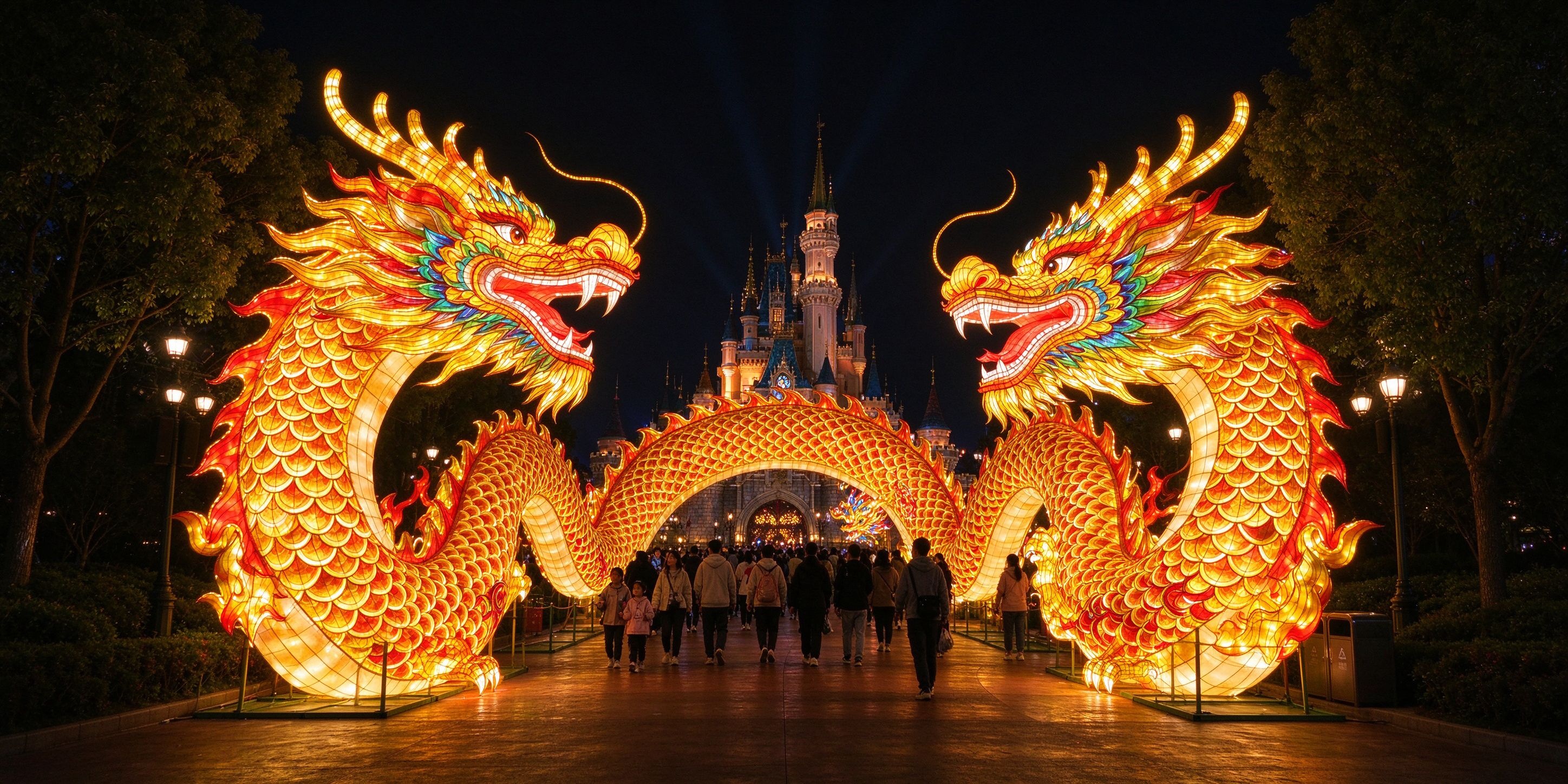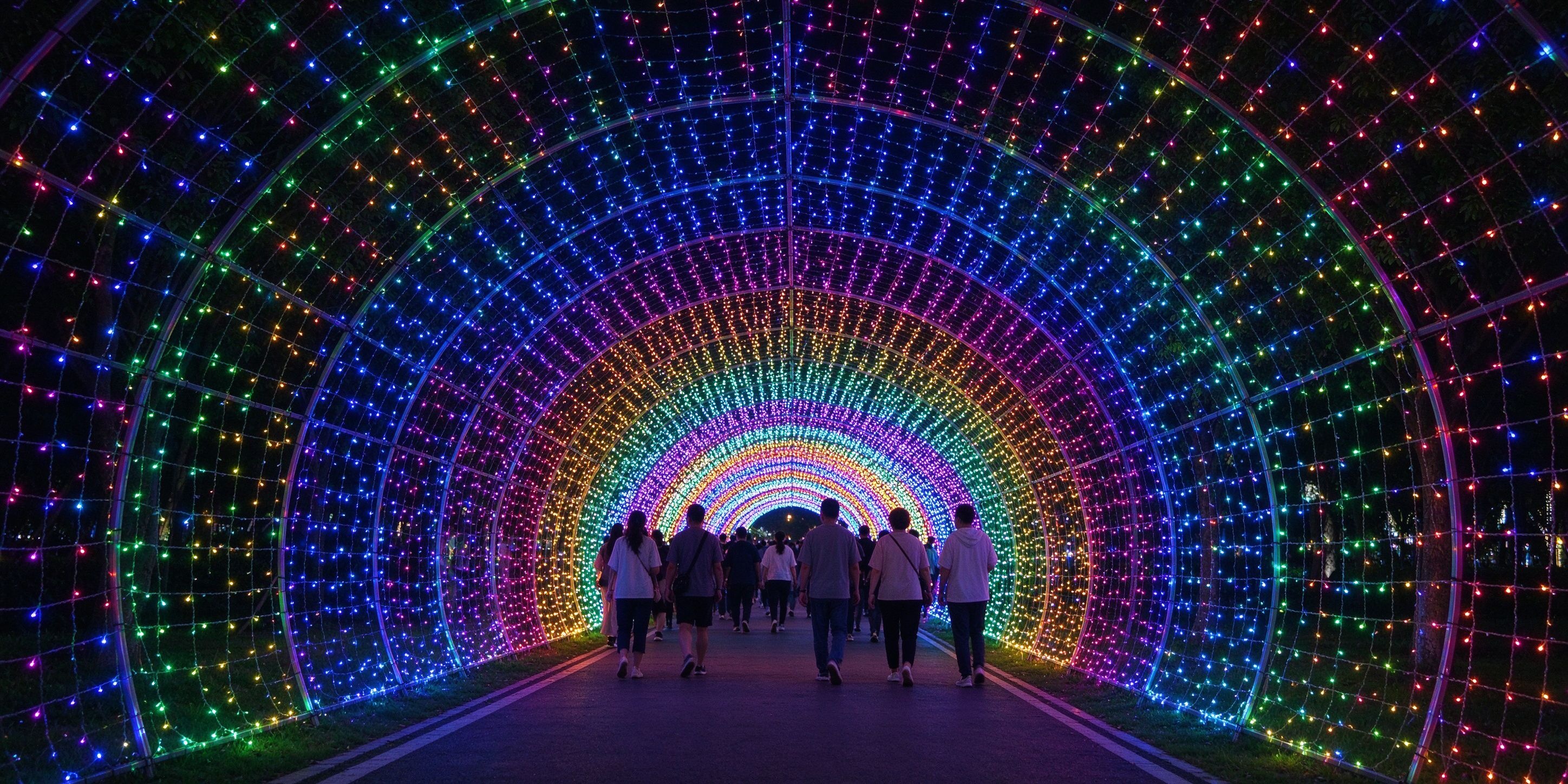

A lantern festival is an assembly of steel, fabric and electricity visited by thousands of people in the dark — which is precisely why safety standards are the backbone of every successful event. Electrical faults, fire risk and structural failure are the three areas where festivals have failed, and all three are preventable with the right specifications, documentation and operating discipline. This guide gives event organizers and venue operators a practical compliance framework, from supplier documentation to nightly inspection routines.
Electrical Safety: The First Line of Defence
Start with the specification
Every lantern and light sculpture — from a fire dragon lantern to a light waterfall sculpture — should meet a minimum electrical standard before it reaches your site. At our factory, that means IP65 waterproofing for outdoor units, low-voltage DC lighting circuits (12V or 24V) inside each lantern, and certified CE/UL components. For venues, require the supplier's electrical documentation up front: insulation certificates, voltage configuration (110V, 220V or 240V), and the power draw per circuit so your distribution design is accurate.
Distribution and protection
- Residual current devices (RCD/GFCI): every outdoor circuit must be protected; these are the single most important safety devices in a temporary installation.
- Waterproof connections: all outdoor cable joints must be IP-rated; exposed joints are the classic source of night-time failures.
- Cable management: route cables above ground on cable trays or protect them with ramps where paths cross; never leave loose cable on walking routes.
- Load calculations: have a qualified electrician calculate total load per circuit and confirm the venue supply can carry it.
Nightly verification
Before opening each night, a trained supervisor should check that RCDs are armed, no connections are exposed, and all illuminated elements are functioning. A digital checklist signed by the duty manager is the operating habit that turns a compliant installation into a safely run event.
Fire Safety
The combination of fabric coverings, electrical circuits and crowds makes fire prevention a festival-critical issue. Four rules cover most of the risk:
- Fire-retardant materials: specify fire-retardant silk, acrylic or treated covering for all enclosed lanterns, and ask your supplier for the flame-test documentation. This is non-negotiable for indoor venues and recommended everywhere.
- Clearance and separation: keep lanterns clear of buildings, tents and combustible displays; maintain separation distances recommended by local fire codes.
- Electrical-to-fabric isolation: LEDs and wiring must be properly secured inside the frame so they cannot contact or chafe against fabric; heat-producing equipment should be excluded from enclosed structures.
- Emergency provision: extinguishers at defined points along the route, clear evacuation routes and a staff member who owns fire response. For large events, notify and coordinate with the local fire authority before opening.
Seasonal programming matters here too: a display that runs as a halloween light show in October and a diwali light display in November may introduce new materials (pumpkins, props, additional fabric) — each new element should pass the same fire review as the original lanterns.
Structural Safety
Wind loading and anchoring
Large lanterns are sails. A 10-metre illuminated sculpture such as our Eiffel tower lantern presents a significant wind surface, and its anchoring must be engineered for your site's wind zone, not guessed. Require wind-load calculations from the supplier for every piece above a few metres, and anchor large sculptures to concrete pads or ballast specified in the engineering drawings. In exposed venues, define a wind-speed threshold at which the event closes or large pieces are secured — and communicate it to staff in advance.
Crowd loads and route infrastructure
Structures visitors interact with — arches, tunnels, frames, selfie platforms — must withstand crowd loads in addition to weather. Confirm the supplier has engineered interactive elements for public use, and inspect anchoring after storm events. Temporary flooring, barriers and route furniture should be fixed and load-tested where crowds gather.
Staff Training and Incident Response
Documentation and equipment only protect a festival if the people on site know what to do. Train every staff member before opening night on the three core responses: how to isolate power in an emergency, where fire extinguishers are located and how to use them, and the evacuation procedure for the route. Assign a named safety officer for each operating shift, and hold a ten-minute pre-open briefing that covers the weather forecast, any faults logged from the previous night and the inspection checklist. Equally important is the incident log: record every RCD trip, every damaged connection and every near-miss, and review the log weekly to spot patterns before they become problems. Festivals that treat safety as a daily operational habit, not a pre-opening document, are the ones that run season after season without incident.
Accessibility and Crowd Management
Safety includes the path itself. Provide step-free routes, minimum path widths for wheelchairs and strollers, adequate path lighting (beyond the display lighting itself), clear exit signage and emergency exits that remain unobstructed throughout the night. Capacity planning — timed entry or capped admission — protects guests from overcrowding in hero zones and tunnels, where the risk of crushing is highest. Share the crowd-management plan with local authorities where required, and rehearse the evacuation procedure with staff before opening night.
Compliance Documentation Every Organizer Should Collect
- CE / UL certificates for lighting and electrical components.
- IP65 waterproofing certification for outdoor units.
- Fire-retardant test reports for covering materials.
- Wind-load and structural calculations for large sculptures.
- Installation drawings and a wiring diagram for the whole display.
- Warranty and spares commitments in writing.
If a supplier cannot produce these, that is not a negotiation point — it is an exclusion criterion. Our factory supplies this documentation with every order, because a festival that cannot pass inspection is a festival that cannot open.
Conclusion
Lantern festival safety is a system: certified equipment, engineered structures, disciplined installation and nightly verification. Electrical protection devices, fire-retardant materials, wind-load calculations and crowd management are not bureaucracy — they are what let thousands of visitors enjoy a magical night without incident. Build safety into the specification from the first supplier conversation, and your event will pass inspection, protect your reputation and return for many seasons. Contact our engineering team to review your display specification against these standards — we are glad to help, free of charge.
Ready to start your project? Contact the Lantern Festival team at our contact page or call +86 13990006666 for a free consultation and quotation within 48 hours.